A hotel can’t sell a room nobody cleaned, and it can’t check in a guest when nobody is at the desk. Hospitality staffing is an operations problem before it is an HR problem: 65% of surveyed hotels still report staffing shortages, and housekeeping and front desk are the two roles hoteliers name most often, according to the American Hotel & Lodging Association’s Front Desk Feedback survey (conducted December 2024-January 2025).
Gaps in either role put room revenue and review scores at risk the day they open, so hotels need a year-round plan that covers seasonal forecasts and daily gaps while cutting turnover.
What is hospitality staffing?
Hospitality staffing is the practice of keeping a hotel’s guest-facing and back-of-house roles filled through every swing of the year, which means forecasting, scheduling, rehiring, and retention sit alongside recruiting. The category splits three ways, and each one solves a different problem. Staffing agencies supply temporary labor at a markup.
On-demand shift apps fill single shifts with outside workers who don’t know the property. In-house hiring technology builds the hotel’s own bench, so managers recontact and directly hire past applicants and seasonal alumni instead of renting the same labor every cycle.
Hiring once and hoping the roster holds fails in an industry with persistent turnover. Accommodation and food services averaged a 4.2% monthly quits rate across 2025, a broader sector figure that still signals how fast a roster can thin out.
Why housekeeping and front desk are the hardest roles to keep covered
Housekeeping and front desk are difficult to keep covered because demand is time-sensitive and vacancies affect work that cannot be deferred. Rooms have to be serviced before arriving guests need them, and the desk has to stay staffed through check-in, check-out, and overnight operations.
AHLA’s survey found housekeeping shortages at 38% of hotels and front desk shortages at 26%, the two most-cited gaps industry-wide.
Turnover can reopen those same gaps on repeat. The BLS recorded a 5.5% average monthly separations rate for accommodation and food services in 2025, and early departures are especially disruptive because a replacement can leave before reaching full productivity.
The guest may see the gap before the P&L does. Cleanliness problems pull review scores down, making room readiness visible well beyond the day of a shortage. Hotels that cover housekeeping gaps with existing employees also tend to lean on overtime, which raises labor costs while the remaining staff carries more work.
How to forecast staffing across peak, shoulder, and off-season
Flat headcount models fail because hotel demand swings by season, day of week, and hour. Seasonal occupancy changes can require a much larger peak roster, so housekeeping and reception coverage need to adjust throughout the year, not just at the edges of the calendar.
Use Fountain CRM to segment rehire-eligible housekeeping and front desk alumni, then move respondents into the ATS before occupancy climbs. Without a seasonal bench, recruiting starts cold after demand has already risen; re-engaging known seasonal workers puts them into the hiring flow ahead of peak.
Occupancy percentage alone can mislead. A property can look manageable on daily occupancy while a concentrated arrival window overwhelms the desk. Size front desk coverage to anticipated check-in surges, and budget housekeeping hours per occupied room rather than a fixed headcount per day, tracking pre-peak ramp time as its own planning metric alongside the two above.
A smarter, connected way to hire, engage, and retain frontline teams
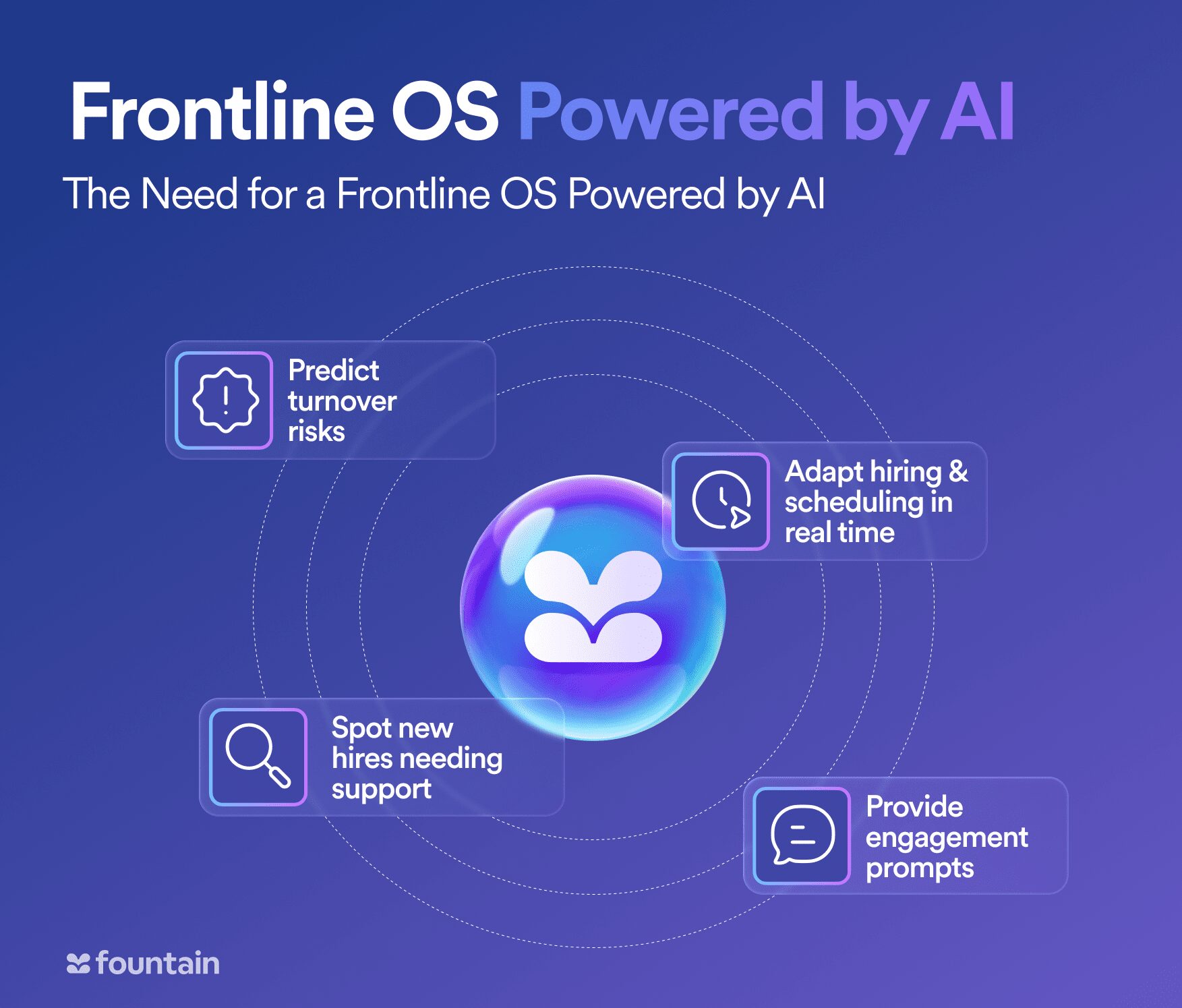
Centralize scheduling, hiring, onboarding, engagement, and analytics in one AI-powered platform built for the frontline workforce. Fountain OS gives leaders the real-time insights and tools they need to predict turnover, boost retention, and streamline high-volume operations.
Automate repetitive tasks, identify at-risk employees early, and make data-driven workforce decisions with a unified solution designed to help frontline teams thrive.
Complete recruiting, screening, background checks, and training before occupancy begins to rise, since new room attendants need time to reach the pace of experienced staff. Returning seasonal staff skip most of that ramp, so contact prior seasonal employees before posting anything publicly.
During shoulder and off-season months, give a core group of year-round employees stable hours so they stay available for the next peak, and keep former room attendants and desk agents on a contact list to shorten the next hiring cycle.
How to cover day-to-day and last-minute gaps
Reliable day-to-day coverage starts with a staffing bench built before it’s needed. An unexpected call-out or an unforecast sold-out night still has to be covered by 3 p.m., and hotels that handle these gaps without panic built that bench in advance.
- Cross-train front desk and housekeeping staff so managers have more options during a crunch. Cross-training can improve job performance, retention, and service quality, but the limit is fatigue: overworking existing staff can turn a short-term fix into the reason someone quits.
- Build an on-call and part-time pool from people who already know the property. This may require higher headcount overall, but a pool of part-time workers who want extra hours gives managers a source of coverage before they turn to an outside agency or app. Re-engaging past applicants and seasonal alumni through the year keeps that roster warm, so a manager is calling a known person instead of renting labor every cycle.
- Stagger shifts to the demand curve instead of running a flat daily roster. Housekeeping shifts can begin at different times through the day instead of bringing every housekeeper in at once, and front desk shifts can overlap during the check-in surge. Flexing hours can push income volatility onto workers, which may raise turnover, so pair staggering with a stability commitment such as locking schedules a week out.
- Reserve agencies and on-demand apps for genuine same-day gaps. Agency labor generally costs more than direct hiring because the bill rate includes a markup, and outside workers can also bring reliability or property-familiarity challenges just when a manager needs someone immediately.
Hotels that rely first on their own bench, backed by a hiring process that refills it quickly, only need agencies and apps for the occasional same-day shortage rather than routine coverage.
Retention and the true cost of turnover
Every exit reopens a gap the hotel already paid to fill. Fountain’s research puts the cost of replacing a single frontline worker at roughly $7,000 once recruiting, training, and lost productivity are counted, and nearly half of frontline hires (43%) leave within their first 90 days, according to Fountain’s Frontline Report 2025.
Because so many departures happen early, much of that cost lands on people who never reached full speed.
Track departures by role and tenure, record why employees leave, and address recurring conditions before more shifts go vacant. Hilton’s turnover runs at half the industry average, and fewer departures mean fewer reopened roles, so operators should track exit conditions and intervene before housekeeping or front desk vacancies return.
Open Fountain CRM alongside Analytics & BI, segment workers by role and 90-day cohort, and review which cohorts are reopening vacancies. A property-wide average can hide early housekeeping departures that a role-and-cohort view would catch.
Review vacancy rate by department monthly rather than saving it for a board slide, watch time to fill to see how long a gap stays open, and track labor cost per occupied room to connect staffing levels and turnover to the property’s operating costs.
Pair those with flexible, demand-based scheduling, since predictable hours are one of the more direct levers a property has on early-tenure turnover.
How Fountain helps hotels keep housekeeping and front desk covered
Rented labor carries a markup every time a gap reopens, with less property knowledge than someone already trained. Cue, Fountain’s orchestration layer launched April 14, 2026, routes a staffing request to the right tools: a regional director can ask it to build a slate for 15 housekeeping and 6 front-desk openings before peak, prioritizing past seasonal staff, while managers review candidates and make the call.
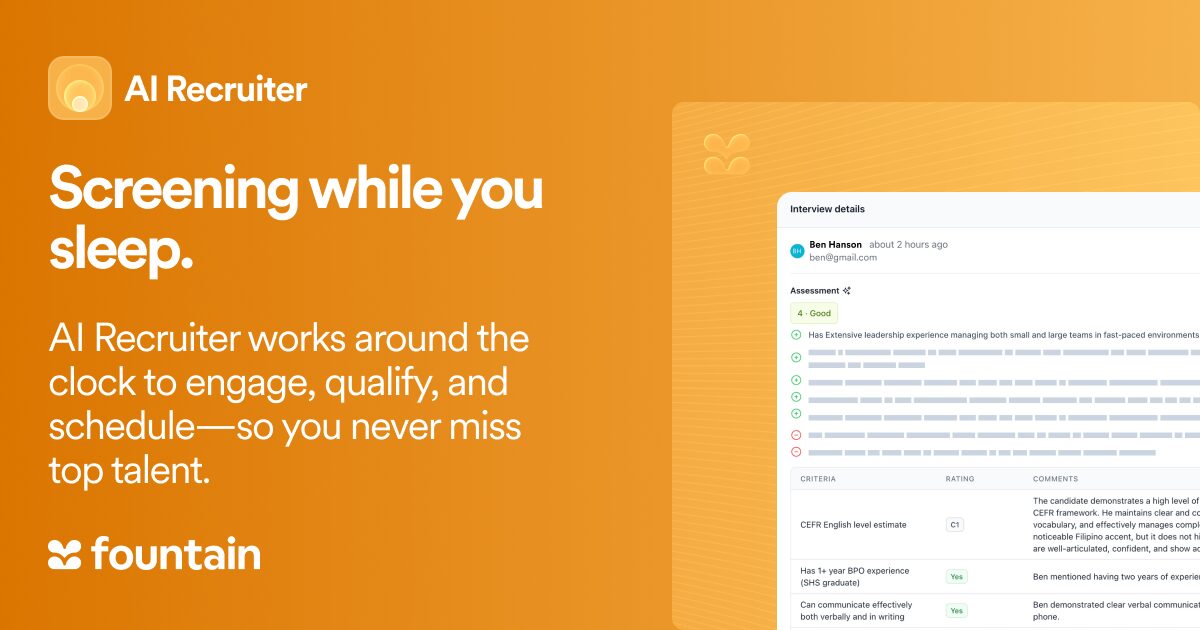
Anna runs 24/7 voice and SMS screening with structured scoring. Emma guides onboarding paperwork, and Sam checks in through the first 90 days to flag retention risk. All three are live, under manager approval.
CRM holds the bench of past applicants and seasonal alumni, ATS and Sourcing handle mobile-first applications, Onboarding tracks Day 1 readiness, and Shift & Scheduling fills open shifts across a property group. Bojangles, a 750-location quick-service restaurant chain, cut time-to-hire 80%, from about 30 days to 5.8, according to its Fountain customer story.
A housekeeping gap that sits open for weeks means more overtime and more cleanliness complaints in reviews. Closing it in under a week with people who already know the property is the fix. See it on Fountain’s hospitality page, or book a demo to get started.
Frequently asked questions about hospitality staffing
What is hospitality staffing?
Keeping a hotel’s guest-facing and back-of-house roles filled through every seasonal swing. It combines forecasting, scheduling, rehiring, retention, and recruiting, rather than hiring once and hoping the roster holds.
How is hospitality staffing different from using a staffing agency or a gig app?
Agencies supply temporary workers at a bill-rate markup, and gig apps fill single shifts with outside workers. In-house staffing gives the hotel its own bench and a direct hiring process, so the same gap doesn’t have to be rented over and over.
How much does hotel turnover actually cost?
Fountain’s research puts the cost of replacing a single frontline worker at roughly $7,000 once recruiting, training, and lost productivity are counted, and 43% of hires leave within 90 days. Early departures concentrate that cost among replacements who never reached full speed.