Running a frontline workforce today means navigating challenges that look very different from even two years ago. Frontline workers have more options, the labor market is tight, and the strategies that once worked for hiring and retention simply don’t deliver the same results anymore.
Even so, we know you’re juggling a lot. Operational demands don’t stop. Staffing gaps create real problems. And you’re trying to keep teams stable while maintaining service quality. It’s a tough spot to be in.
That’s exactly why Fountain partnered with Lighthouse Research & Advisory to survey nearly 2,000 frontline workers. We wanted to cut through the noise and understand what really matters to them.
What makes them stay? What pushes them out the door? And how can employers build teams that stick around?
Here’s what the data showed us.
The Turnover Problem for Frontline Workers Keeps Getting Worse
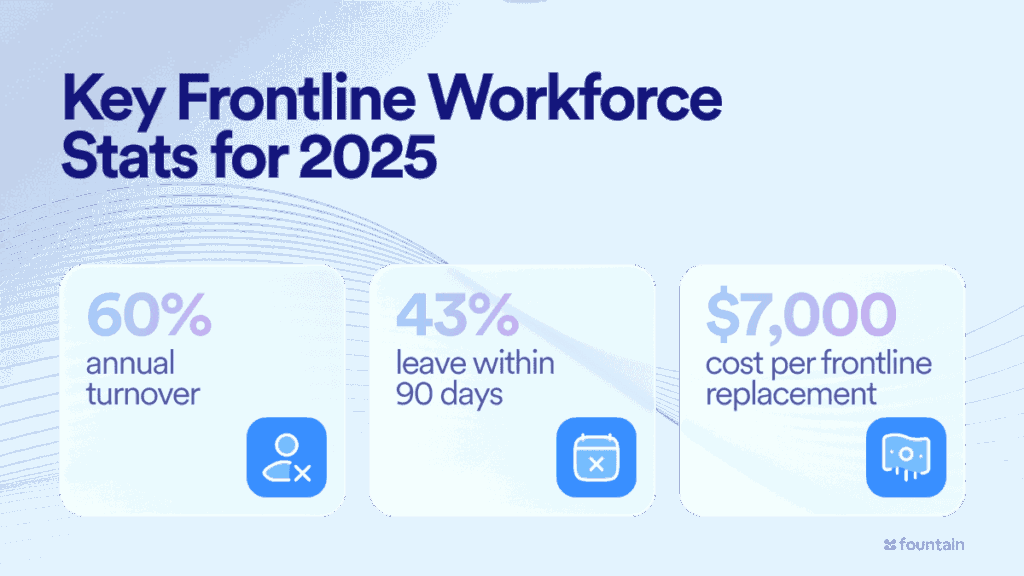
Retail turnover is at 60 percent annually right now. In other words, you’re basically replacing your entire workforce every 18 months, which creates chaos for operations, customer service, and team morale.
However, here’s the part that really stands out: 43 percent of workers are gone within 90 days. They leave before they’ve gotten good at the job, before they’ve really contributed anything meaningful. They’re just… gone.
Each person who walks out costs about $7,000 to replace once you add up recruiting, training, and lost output. If you’ve got 10,000 frontline workers, you could be losing $40 million a year. That’s not an HR problem to track on a dashboard somewhere. That’s money you can’t afford to lose.
Ultimately, the reality is these problems have solutions. Once you see what’s driving people away, you can fix it.
Frontline Workers Just Want to Know What’s Actually Happening
The research made one thing crystal clear: frontline workers want transparency. Real transparency, not corporate talk about open-door policies.

For example, frontline workers want straight answers about pay. They also need to know their schedule before the last minute. Understanding how they’re being evaluated helps them feel grounded. And seeing whether there’s a path to grow keeps them engaged.
When people feel informed and in the loop, they stay. Conversely, when they’re confused about expectations or feel like decisions affecting them come out of nowhere, they start job hunting.
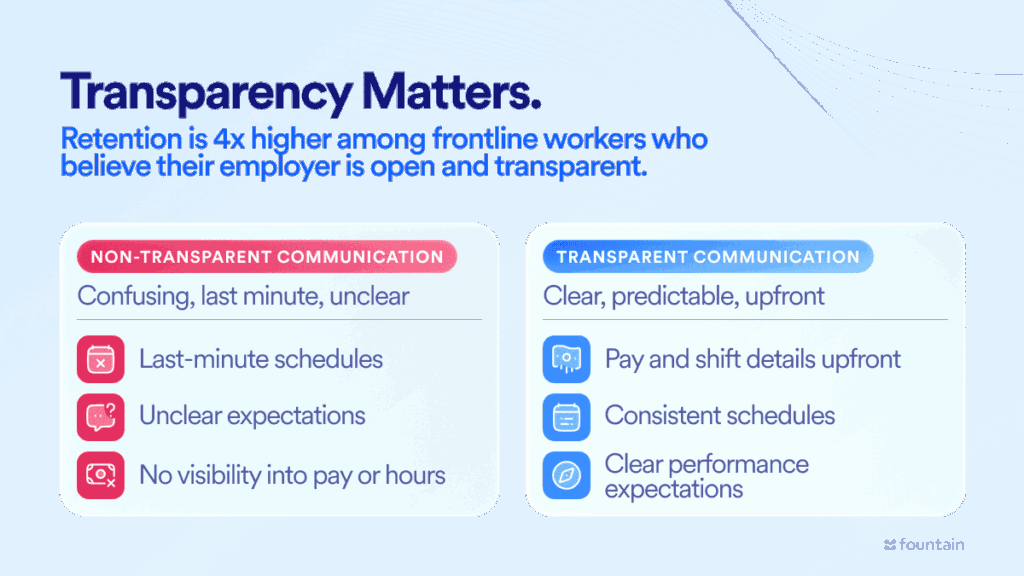
Transparency isn’t complicated. It just requires being intentional about communicating clearly at every step, from hiring through scheduling to performance reviews.
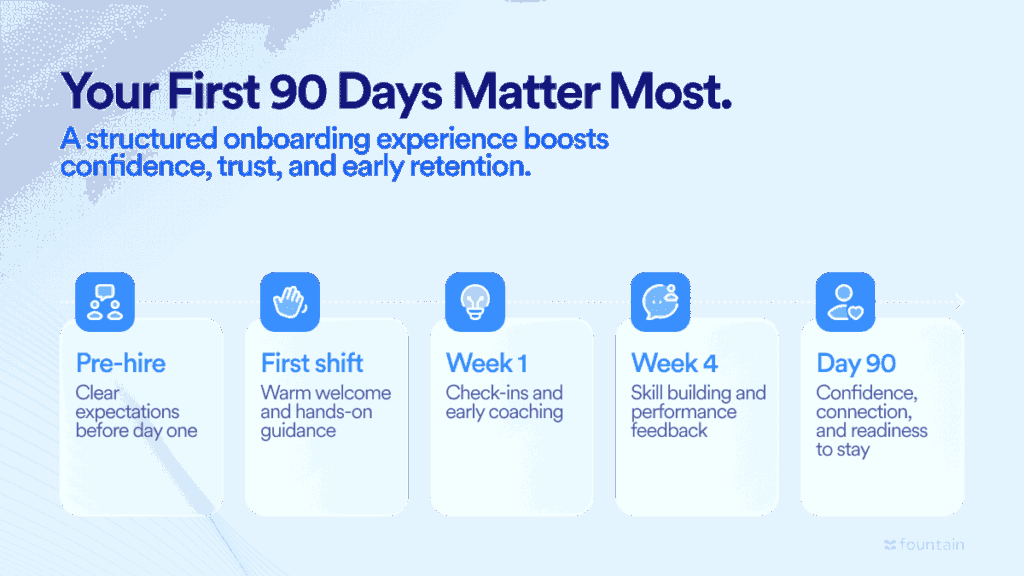
The First Three Months Will Make or Break Your Frontline Workers
Remember that stat about 43 percent leaving in the first 90 days? That’s because your onboarding process isn’t working.
Too many companies treat those first few weeks like an administrative task. Fill out forms, watch some videos, here’s where the bathroom is, good luck out there.
Meanwhile, new hires are making critical judgments during that time. Does this company actually function like they said it would? Is anyone going to help me succeed here? Did I make the right choice?
The companies with strong early retention aren’t doing anything magical. Instead, they’re being deliberate. New hires are paired with experienced workers. Regular check-ins happen consistently, not just once. Good work in the first month is noticed and acknowledged.
So structure your first 90 days like it matters, because it does. That’s your window for boosting retention.
Scheduling Might Be Your Biggest Retention Tool
This finding jumped out: how you handle schedules has a massive impact on whether people stay or go.
What workers want isn’t complicated. For instance, they need schedules far enough in advance to plan their lives. Consistent weekly hours help them budget and stay stable. Fair handling of time-off requests signals respect and trust. And clear communication, instead of last-minute texts, keeps everyone aligned.
Think about what unpredictable scheduling actually means for someone’s life. Budgeting becomes impossible when they don’t know whether they’re working 20 hours or 40. Childcare plans fall apart without advance notice. Doctor appointments get pushed aside because they can’t predict their availability. In the end, they’re just constantly reacting to whatever schedule gets posted.
Fortunately, the good news is this is fixable with better systems. Automation helps. Clear policies help. Training managers to think about the human impact of their scheduling decisions makes a big diffrence.
Belonging Happens in Small Moments
Belonging doesn’t come from company initiatives or culture posters on the wall. Instead, it comes from daily interactions that show workers they matter.
The managers who build strong teams focus on simple, consistent actions. They say thank you when someone does good work. Updates about what’s happening flow regularly to the team. Time is set aside when an employee has a question. And feedback is genuinely heard, not gathered just to check a box.
This stuff matters even more when people work rotating shifts or don’t see the same faces every day. As a result, those small connections often separate “this is just a paycheck” from “I actually like working here.”
Give your frontline managers real training and tools for this. Recognition and communication aren’t soft skills. They’re retention strategies that directly affect your bottom line.
Frontline Workers Actually Prefer AI in Hiring (Really)
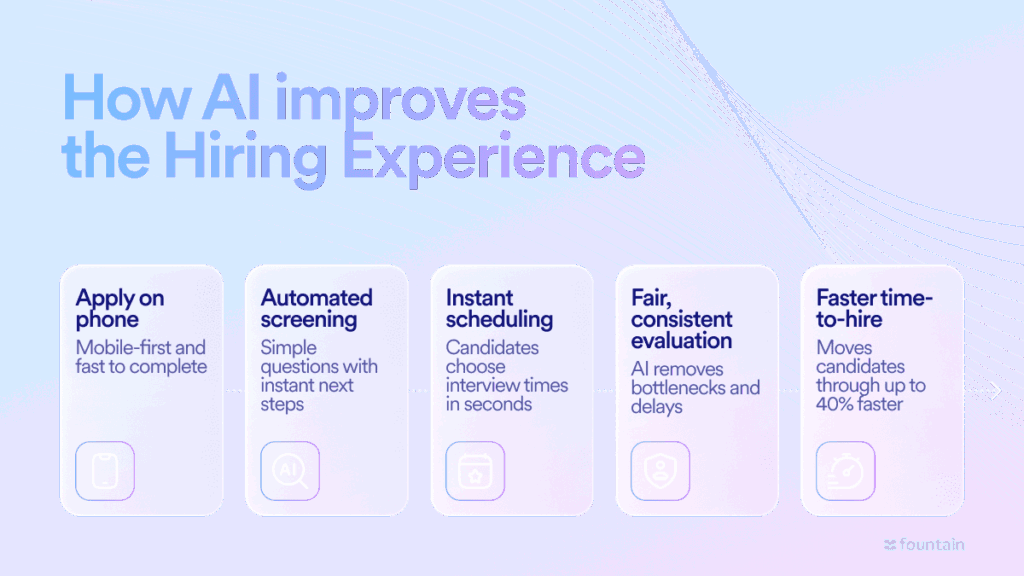
Here’s something that surprised us: 74 percent of workers said they’d rather deal with AI during hiring than traditional methods.
Their reasoning makes sense. AI is faster. It doesn’t ghost you for two weeks. It feels more fair because there’s no awkward small talk or wondering if the hiring manager just doesn’t like you for some random reason.
This doesn’t mean replacing all human interaction with bots. That would be weird. However, for screening and scheduling, automation makes things better for everyone. It moves faster, it doesn’t play favorites, and it removes some of the unconscious bias that creeps into traditional recruiting.
Companies using AI in hiring are seeing 40 percent faster time-to-hire. That means fewer unfilled shifts and candidates who don’t lose interest while waiting three weeks for someone to call them back.
The Math Is Pretty Brutal
Let’s talk real numbers.
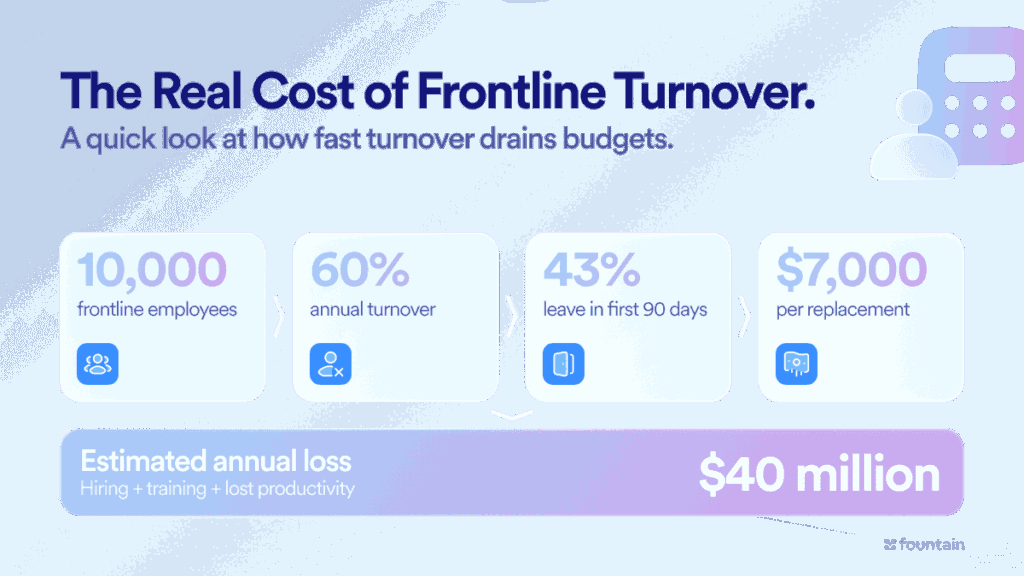
A company with 10,000 frontline workers is potentially losing $40 million every year to turnover. That includes replacement costs and lost productivity.
Since 43 percent of employees leave in the first 90 days, $18 million of that is being lost before they’ve even started contributing.
Meanwhile, hiring costs have doubled since 2020. A lot of that comes from companies still using manual processes that were outdated five years ago.
The companies investing in better retention and smarter hiring aren’t doing it out of the goodness of their hearts. Instead, they’re doing it because the ROI is obvious and immediate. Reducing turnover pays for itself fast.
Five Things to Prioritize This Year
Based on everything in the report, here’s where to focus your energy in 2025:
1. Get people hired faster. Your application needs to work on a phone. Interview scheduling should happen in hours, not weeks. Every unnecessary delay loses you candidates to competitors who move quicker.
2. Treat onboarding like it matters. Those first 90 days are your retention opportunity. Build structure around it. Assign support. Check in regularly. Make sure someone’s paying attention to new hires.
3. Fix your scheduling systems. Stop relying on individual managers to wing it. Build systems that prioritize predictability and fairness. Technology can help, but the foundation is clear policies and expectations.
4. Equip your managers properly. They need training and tools to communicate well, recognize contributions, and build real team connection. Most managers never receive proper training to do this effectively.
5. Use technology where it actually helps. AI can make hiring faster and fairer. Scheduling software eliminates manual chaos. Just make sure you’re choosing tools that improve the worker experience, not just making things easier for corporate.
What Happens Next
Frontline workers told us what they need. Transparency. Predictability. Fair treatment. Managers who actually care. None of that is unreasonable or impossible to deliver.
The companies that take this seriously won’t just see better retention numbers: they’ll build teams that can handle operational challenges instead of constantly scrambling to fill empty shifts.
The Frontline Report 2025 gives you everything you need to make real changes. The only question left is how fast you’ll take action on it.
Your frontline workers are ready for something better. Time to show them you are too.