More than 70% of frontline employees have applied for a promotion or new role, according to McKinsey, and fewer than one in four gets one. The advancement most hourly employers offer exists in a handbook and on a careers page, and the people it’s meant for can’t reach it from a register, a loading dock, or a hotel floor.
43% of new frontline hires leave within 90 days, and replacement costs stack training and lost productivity on top of the expense of hiring again. Internal mobility cuts that replacement hiring and fills hard-to-source roles with people already on the floor, turning shift leads, drivers, technicians, and pharmacy techs into promotions rather than outside bets.
What is internal mobility?
Internal mobility is the movement of employees into new roles, assignments, or locations within the same organization. It covers vertical moves (an associate becoming a team lead), lateral moves (a cashier moving to receiving), cross-functional moves (a warehouse picker moving into dispatch), temporary assignments, and geographic transfers.
Frontline cross-training counts too: a worker certified on a second station has moved, even if the title didn’t change.
Three adjacent terms get used interchangeably and shouldn’t be:
- Internal recruitment is one mechanism inside internal mobility: posting an opening and filling it with a current employee.
- Career pathing maps the roles a worker can pursue and the requirements for each move.
- Succession planning is forward-looking preparation for critical roles, usually leadership, run at the organization level rather than for one individual.
Internal mobility is the movement itself, whatever planning or posting produced it.
Why internal mobility looks different for hourly and frontline workers
Hourly and frontline workers often lack the inbox, laptop, portal access, and schedule flexibility that desk-worker mobility programs assume. They’re expected to learn about openings through a portal they’ve never logged into, on a corporate email address they don’t have, during a shift that doesn’t allow them to look.
That’s one of several access barriers frontline workers face every day, and employers often can’t see the resulting knowledge gap: 65% of frontline workers are unaware how to advance, and only 17% report frequent career-advancement conversations with a manager against the 40% of employers who believe those conversations are happening.
Frontline workers define growth through practical priorities: better pay, hours they can plan around, a skill that transfers, and a manager who backs them.
Many also prefer individual-contributor roles over people management, so advancement for that group means a higher-paid skilled role, a certification, a better shift, or a specialty station, not a title with direct reports. Paths need to run sideways as well as up, and a forklift certification deserves the same visibility as the supervisor track.
Map the paths, then build the skills to climb them
A usable career path lists every role and pay band, then states the requirements for each move. A retail path can run from team associate through team lead, store leadership, and store manager, with pay bands at every rung.
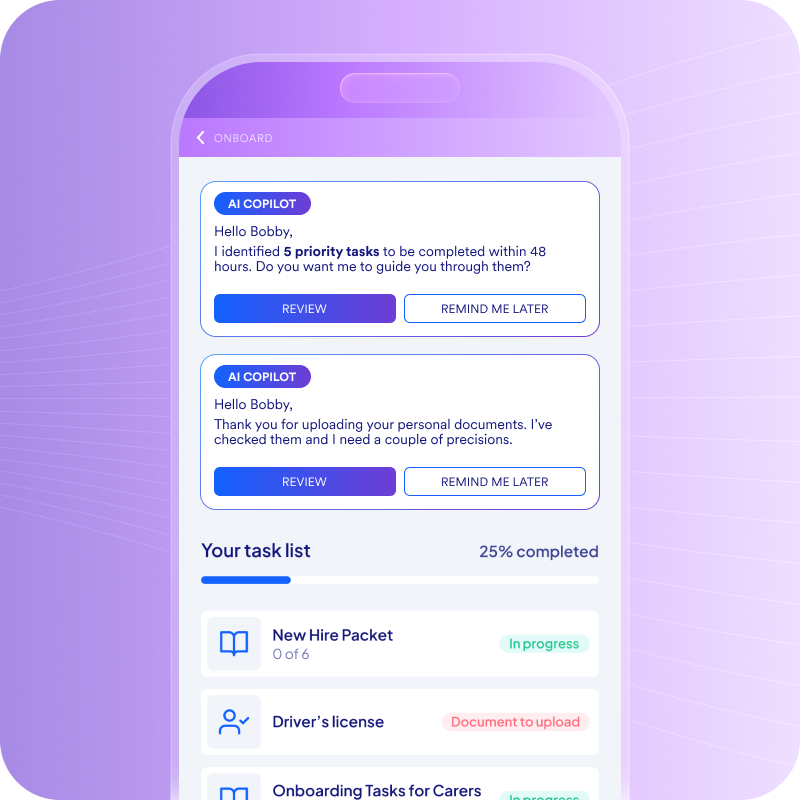
Faster ramp-up. Lower early attrition. AI onboarding built for speed, scale, and retention.
Top employers are already using Fountain’s Frontline OS to:
✅ Reduce turnover in the first 60 days
✅ Eliminate manual paperwork and task delays
✅ Accelerate new hire productivity with smarter workflows
Curious what smarter onboarding could unlock for your team?
A restaurant path can run from crew member through shift leadership and restaurant management. The same logic applies to a package handler becoming a driver or a nursing assistant moving into an LPN apprenticeship.
For each role, publish the skills that separate it from the one before, the pay band it moves into, and the performance bar that makes someone eligible, whether that’s a clean attendance record or a certification. Without those three, “we promote from within” reads as a slogan. One high-turnover role, mapped this way, is enough to turn the slogan into something a worker can see.
Development then has to fit inside a shift: cross-training on a second station during slow hours, paid micro-learning finished on a phone in the break room, shadowing a lead through a close, a stretch assignment running one inventory count, and pairing with a peer mentor all build toward the next step without pulling anyone off the schedule for a day.
Make internal openings accessible on the frontline
Internal openings must be published through the mobile and on-shift channels frontline workers already use, because inaccessible opportunities push people to leave for roles they could have taken internally.
A text keyword that returns nearby openings, a QR code on the break-room board, a mobile board a worker can open on a break, and a manager who mentions the role at shift change all reach people who will never open a desktop portal. It’s the same logic Fountain recommends for sourcing external candidates: meet people where their phone already is.
Expressing interest should take one tap, with the full application, assessment, and references waiting until a manager has reviewed the profile, since the employer already holds the worker’s tenure and attendance history.
Acknowledgment then has to be fast: rejected internal candidates are nearly twice as likely to quit as those who get the role, and silence does more damage than a no. Acknowledge interest within a shift, and no worker should end the week without knowing someone saw their name.
Make the process fair and keep managers on board
A fair internal-mobility process publishes eligibility, standardizes assessment, removes manager vetoes, and rewards managers for developing talent. Requiring a manager’s sign-off before a worker can apply protects the schedule, but it’s also a documented mechanism of talent hoarding: nearly half of managers resist internal mobility when their incentives are misaligned.
A notify model, where the worker tells their manager after selection and serves a defined notice period, removes the veto while still giving the losing site time to plan.
Assessment has to be consistent across locations, shifts, and groups. The EEOC’s Uniform Guidelines on Employee Selection Procedures (issued 1978, still in force) generally apply to promotion and transfer decisions. This is general information, not legal advice, and requirements can vary by jurisdiction; confirm your specific obligations with counsel.
One scored interview template per commonly promoted role, used at every location, keeps the same questions in front of every internal applicant regardless of shift, and everyone who misses out gets told why.
Backfill ownership settles most of the manager-buy-in problem: a store manager who promotes a lead into another site and inherits an open shift and a hiring cycle will stop promoting, so backfill sourcing has to sit with talent acquisition or a district lead before the program launches.
Managers whose people move up should see it in their review, and internal promotion rates should be published as accountability numbers. Retail managers report limited time for coaching, so a one-page career-conversation guide and a 15-minute quarterly check-in do more than a training module they’ll never open.
Run the move, then measure what happens
An internal move should use a shortened external workflow and be measured by internal fill, funnel conversion, post-move retention, and equity. Screening can skip identity, work authorization, and the attendance history already on file, and keep a structured interview for the new role, a certification check, and the receiving manager’s sign-off.
Scheduling, the offer, the pay change, and any compliance items run through the stages an external candidate would see, minus the redundant ones. Internal movers already know the operation, while external hires take about two years to reach the same performance and get paid 18% to 20% more along the way.
The mover then gets onboarded into the new role, with role-specific training, a documented next step, and manager check-ins: a promotion without any of those three is a departure with a new title. Managers approve every move and every exception; the system only recommends workers, routes profiles, and handles paperwork.
That distinction matters because New York City (enforcing Local Law 144 since July 2023) and California (automated-decision-system regulations in effect since October 2025) both treat automated tools used in hiring and promotion decisions as regulated employment systems, built around a human as the actual decision-maker.
The measures below show whether the program is working, and the first is the one leadership will ask for.
- Internal fill rate: Divide roles filled internally by total roles filled. Set your own baseline, then track it quarter over quarter and site over site.
- Interest-to-move funnel: Track how many workers tap interest, complete the short application, get interviewed, and move. Treat the first quarter as the baseline and measure drop-off between stages.
- Post-move retention: Measure whether movers are still employed at 12 and 24 months compared with peers who didn’t move. Per SHRM’s reporting on internal-mobility retention, workers promoted within three years of hire have a 70% chance of staying, against 45% for those with no internal move.
- Equity of moves: Compare interest and move rates by location, shift, and demographic group. A program that only promotes day-shift workers at flagship stores is a favoritism program with a mobility label.
Read together over a quarter, a flat fill rate with a healthy interest funnel points at manager approval as the choke point, while strong fills and weak post-move retention point at onboarding.
How Fountain helps hourly employers run internal moves
Cue, Fountain’s orchestration layer, takes a goal in plain language, such as “rehire our top-performing seasonal workers from last holiday, good standing only, and route them to open roles in the Southeast,” and breaks it into tasks across those tools, within limits the customer sets.
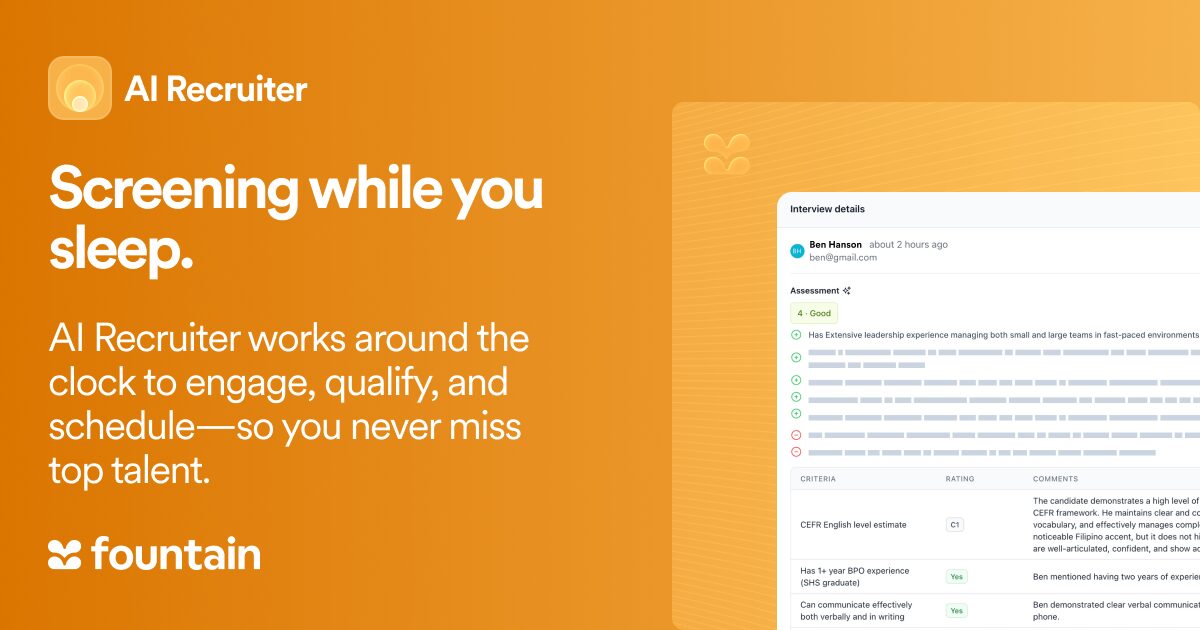
Sam, Fountain’s AI Satisfaction agent, surfaces retention and readiness signals so a manager knows who is a flight risk and who is ready to move, and Emma, Fountain’s AI 24/7 Support agent, answers a worker’s questions about an internal opening on their own phone. Anna, the AI Recruiter, runs a structured voice interview where an internal role still calls for one, scoring every applicant the same way regardless of shift or location.
Fountain’s Analytics & BI applies the same location-level conversion analytics to internal postings that it does to external hiring, so a district lead can see which sites turn interest into moves.
Marsden Services used that same workflow to cut vacancy at client sites from 18% to 6% and raise Day 1 retention by 16%, the kind of gain internal-mobility leaders can chase once their own funnel is visible.
More than 70% of frontline workers have already applied for the next role; publishing it where they can find it, and acknowledging interest within a shift, is what turns that demand into a completed move.
Book a demo to see Cue, Sam, and Anna run an internal move from posted role to first shift.
Frequently asked questions about internal mobility
How can deskless employees find and apply to internal openings?
Openings belong on channels workers already use: SMS keywords, QR codes on break-room signage, a mobile job board, and shift-change announcements from managers. Expressing interest should take one tap, with the full application deferred until a manager has reviewed the profile.
How do you measure internal mobility?
Internal fill rate (roles filled internally divided by total roles filled) is the headline number. Alongside it, track the interest-to-move funnel, post-move retention at 12 and 24 months compared with non-movers, and move rates by location, shift, and demographic group to catch uneven access.
Can internal mobility reduce frontline turnover?
Yes, when the path is visible and the move is supported. Career development is a leading reason frontline retail workers consider leaving, and workers who move internally tend to stay longer than those who don’t.