

One crew member requisition posted in Los Angeles, Chicago, and Buffalo can turn into three different posting formats for the same range, because pay-range disclosure rules vary by state and city in ways that go well beyond whether a number shows up in the ad.
Whether a benefits summary has to ride along, an open-ended range like “$17 an hour and up” even counts as a range, or the rule reaches internal transfers as well as external ads: none of that gets settled by one company-wide template.
For an employer opening the same role across a dozen markets, that variation is the actual operating problem. The pay band itself usually gets approved once, by comp or legal. What breaks is what happens between that approval and the moment a recruiter, several time zones and store managers removed from the decision, publishes an opening and has to guess which fields belong in it.
This article is an operational look at how multi-location hiring teams keep that approved data consistent from requisition to posting, not a summary of what any specific state or city currently requires. Pay-range posting rules are jurisdiction-specific, change often, and carry real financial and legal exposure when a posting falls out of step with them, so confirm your current obligations, market by market, with employment counsel before finalizing a posting template.
Why one posting template rarely travels
Pay transparency, as a category of law, means an employer has to print the wage or wage range for a role in the job ad itself, before anyone applies, rather than disclosing it only on request or later in the process.
Past that shared core, the details diverge by jurisdiction: some require a general description of benefits or other compensation alongside the range, some extend the requirement to internal postings for promotions and transfers, some treat staffing-agency and job-board postings differently than a direct employer posting, and who can enforce the rule, and how, varies too.
A posting that satisfies one jurisdiction’s format can miss a required field in another, or apply the requirement to a posting type, an internal transfer, an agency listing, that the first jurisdiction never touches at all.
The stakes here aren’t one-sided.
- On the employer side, getting a posting wrong can carry meaningful financial and legal exposure, and it varies enough by state and by year that a generic number isn’t useful here; confirm current penalties and enforcement mechanics for your locations with counsel.
- On the candidate side, a Gartner survey of nearly 3,500 candidates, reported by HR Executive, found that 44% skipped at least one job in the prior year because it had no posted range, a reminder that missing pay data shrinks the applicant pool well before jurisdictional risk enters the conversation.
- Pay equity is a related but separate, older legal layer: the Equal Pay Act addresses sex-based wage discrimination and says nothing about what a job ad has to contain. Salary-history inquiry bans are a third, distinct category, restricting what an employer can ask a candidate about past pay without requiring a posted range at all.
Treating all three as one compliance checklist is a common source of posting errors.
How to maintain approved pay data across locations
The reliable version of this workflow starts before a posting exists, and the same handful of steps hold up whether an employer is opening one requisition or two hundred:
- Set the band upstream. Comp or legal approves the floor and ceiling for a role, per jurisdiction where the rules require it, before any posting goes live, so the number a recruiter sees is never something they’re estimating on the fly.
- Attach it to the requisition as data, not free text. The approved band, along with any other required field a jurisdiction attaches to the posting, a benefits description, an application deadline, a commission-only or tipped-role note, lives on the requisition itself rather than in a document a recruiter copies from.
- Propagate it automatically into every location-specific posting. Opening the same role in five markets pulls the same approved band into five postings without anyone retyping it, so formatting differences between jurisdictions never touch the number itself.
- Flag postings still referencing a superseded version. When a band changes, whether from a scheduled comp review or a rule change, every open posting tied to the old version gets surfaced for republishing rather than quietly staying live.
- Keep a durable record of what was posted and when. Some jurisdictions expect an employer to show, after the fact, what range appeared in a given posting; that only works if the history lives somewhere durable rather than in an old email thread or a former recruiter’s files.
Skipping any one of these steps doesn’t usually cause a problem right away. It shows up later, when a posting keeps running after the band moved, or when a format requirement changes and only some locations pick it up.
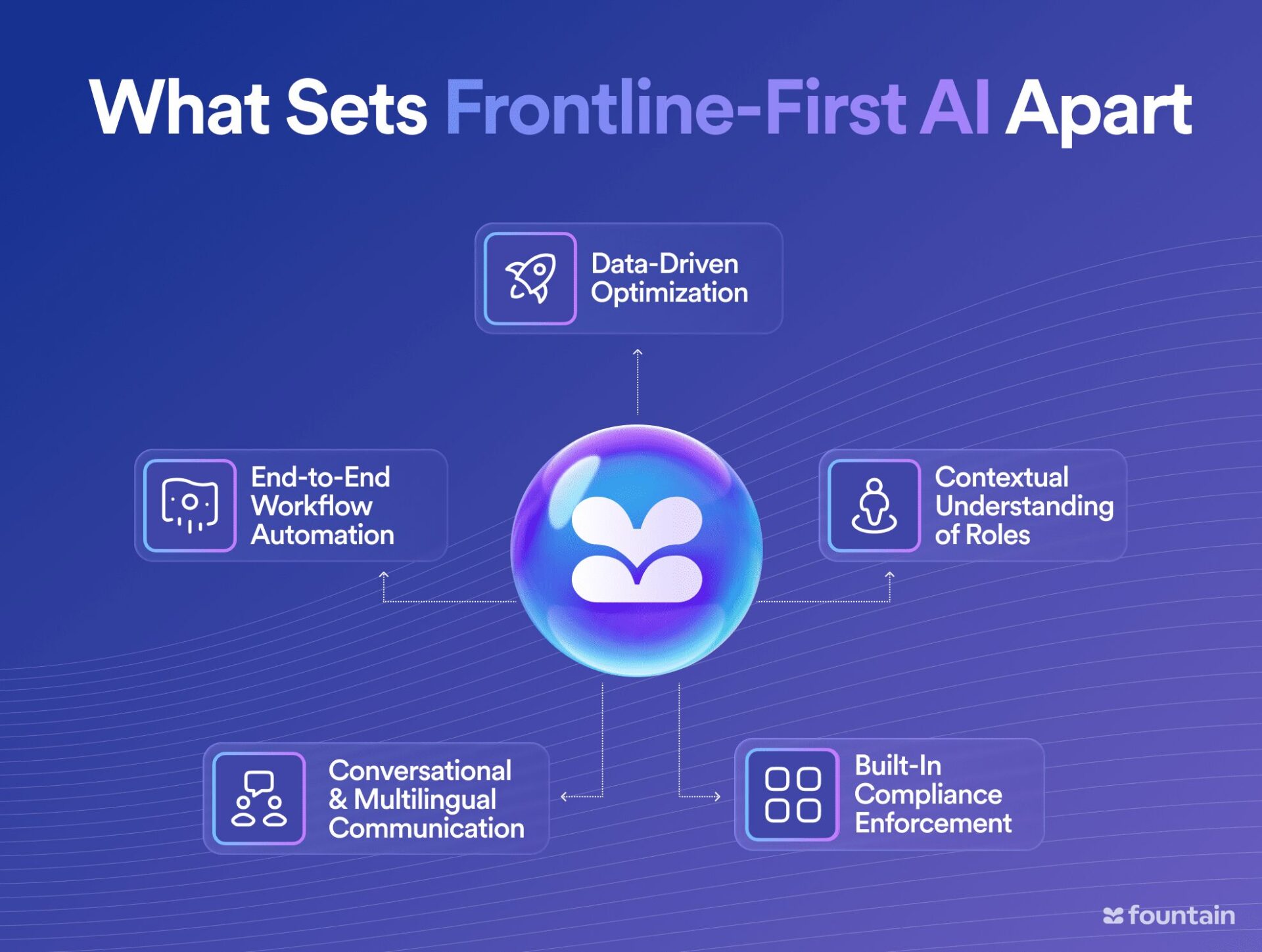
Smarter, faster, and more compliant from day one
See how frontline-first AI helps you reduce time-to-hire, engage more candidates, and stay compliant at scale.
From instant chat-based screening to automated scheduling and built-in compliance, Fountain’s AI gives your team the tools to hire faster and smarter while maintaining accuracy and a great candidate experience.
Schedule a personalized demo and explore what’s possible.
Consistency has to be built into the workflow that creates the posting, because it rarely survives being left to memory.
Keeping the approved posting consistent across internal boards, staffing partners, and job sites
A single approved posting rarely stays in one place. It gets reposted internally for transfers and promotions, redistributed through staffing partners who may publish it under their own account, and syndicated out to job boards that sometimes scrape or aggregate listings without the original employer’s direct involvement.
Each of those paths is a chance for the live version to drift from the one comp and legal actually approved.
That drift is easy to miss because it happens outside the system that created the original posting. A posting that was correct on the day it was approved can still be live, unchanged, on a job board weeks after the underlying band moved, or after the format requirements for that location changed.
Periodically checking what’s actually published against what was approved, across every channel a posting reaches, catches that gap before it becomes exposure.
Why pay transparency is a requisition decision, not a payroll one
The point where this either works or doesn’t is publication, not payment. Payroll records what an employer actually paid, after the fact; a job posting records what an employer told a candidate it would pay, before the first application came in. By the time a mismatch surfaces in payroll, the posting that created it has usually already run its course.
That’s why the approved band needs to sit upstream of the posting workflow, attached to the requisition before a posting is approved to publish, not reconstructed later when a candidate or an auditor asks about it.
Across hundreds of open requisitions in a given month, treating that band as a system-of-record field, rather than something a recruiter carries in their head, is what keeps consistency from depending on any one person’s memory.
How Fountain keeps multi-location postings consistent
Whatever system holds the requisition has to store the approved band per jurisdiction, carry any other required fields into every location-specific opening, and keep a record of what published where. Cue is the intelligence that coordinates Fountain’s agents and products from a plain-language request your team defines.
So an operator opening a new region might type something like, “Set up crew member openings for our California, Illinois, and New York stores with the range our comp team approved for each state.”
Once a posting is live, Emma answers worker and candidate questions about onboarding paperwork, like I-9 and W-4 forms, and helps clear the blockers that come up along the way. Fountain’s post-hire engagement tools, currently rolling out, are designed to gather retention and satisfaction signals after someone starts.
Fountain supports that consistency in three ways:
- Position-level templates: Fountain’s ATS holds job descriptions at the Position level, so teams set required elements once per role there, while opening-level descriptions still allow location-specific tailoring. Bojangles uses that structure to reproduce the approved version at each of its 750 locations.
- Job-board distribution: Because a posting can end up republished by a staffing partner or aggregated onto a job board outside an employer’s direct control, Fountain’s Sourcing manages job-board and paid-channel campaigns, and the direct Indeed integration toggles organic visibility per job, helping keep the version comp approved as the one that reaches the board.
- Audit records: Fountain’s compliance capabilities include audit logs and exportable reports covering candidate records, compliance documents, and system actions, supporting the kind of after-the-fact record-keeping some jurisdictions expect.
That one crew member requisition in Los Angeles, Chicago, and Buffalo still needs only one decision, made once, to reach every location correctly.
If your team is still retyping ranges by location, see how Cue, the ATS, and Fountain’s audit logs keep one approved posting consistent everywhere it publishes. Book a demo to walk through it on your own postings.
Frequently asked questions about pay transparency
What is pay transparency in a job posting?
Pay transparency is the legal requirement, in the jurisdictions where it applies, that an employer include the wage or wage range for a role in the job ad itself, rather than disclosing it only on request or later in the hiring process. The specific fields required, and which postings the rule covers, vary by state and city, so confirm the details for your locations with counsel.
How can multi-location employers keep pay ranges consistent across postings?
The most reliable approach treats the approved range as data attached to the requisition, not text a recruiter re-enters for each posting. A system that stores the current, approved band per role and jurisdiction, and flags postings still referencing an older version, removes the manual step where drift usually starts.
Does Fountain provide legal guidance on pay-range posting requirements?
No. Fountain’s tools help hiring teams carry an already-approved range, and its required fields, consistently into every posting, and keep a record of what published where. Confirming what a given jurisdiction currently requires is a question for employment counsel, not for a hiring platform.