When authorized, the Work Opportunity Tax Credit can provide employers with credits within a per-hire range of $1,200 to $9,600, and a potential credit is forfeited when the pre-screen isn’t signed by the job-offer date or the paperwork isn’t filed within 28 calendar days of the employee’s first day of work (Day 1).
For an employer making one or two hires a month, that’s a form. For QSR (quick-service restaurant) employers, retail chains, or a logistics operator hiring thousands of frontline workers a month across hundreds of locations, it’s a workflow problem, and the credit is usually gone long before anyone opens a tax return.
High-volume employers must screen every applicant at the right moment without slowing the hire. Tax-credit providers can handle the filing, the submission to the state workforce agency, and certification tracking, while the IRS and the Department of Labor provide full detail on the filing mechanics.
The WOTC steps inside the hiring flow begin before tax filing, which is why Fountain sits there: it feeds the workflow where eligibility is won or lost, not the tax filing itself.
What is the Work Opportunity Tax Credit?
The Work Opportunity Tax Credit is a federal tax credit for employers who hire people from groups that face barriers to employment. The target groups include qualified veterans, SNAP and TANF recipients, SSI recipients, qualified ex-felons, long-term unemployment recipients, designated community residents, vocational rehabilitation referrals, and summer youth employees.
That breadth makes screening every new hire more reliable than expecting managers to recognize likely eligibility, especially for less familiar groups: SNAP recipients alone made up about 64 percent of certifications from FY2022 through FY2024, so a screen that skips SNAP eligibility misses the largest share of the credit.
The credit is a percentage of first-year wages, scaled by hours worked: an employee who works 120 to 399 hours earns the employer 25 percent of qualified wages under the Form 5884 instructions, 400 hours or more earns 40 percent, and under 120 hours earns nothing.
Qualified wages are capped at $3,000 for summer youth, $6,000 for most groups, and $24,000 for veterans with a service-connected disability unemployed six months or longer, producing maximum credits of $1,200, $2,400, and $9,600 at the 40 percent rate.
Track certified hires against both hour milestones and forecast by certified category, not by applying the maximum to every potentially eligible hire.
Is WOTC active right now? The 2026 hiatus
WOTC’s authorization lapsed on December 31, 2025. Congress had not reauthorized the program by September 2026, so the program remained on hiatus. The CRS report updated May 13, 2026 states that “wages earned by workers hired after December 31, 2025, are not eligible for the WOTC.”
Bipartisan renewal bills were introduced in both chambers in 2025, including House and Senate versions, but none has passed. On March 19, 2026, the IRS marked Form 8850 status as “no longer in use,” and it had not published a replacement by September 2026.
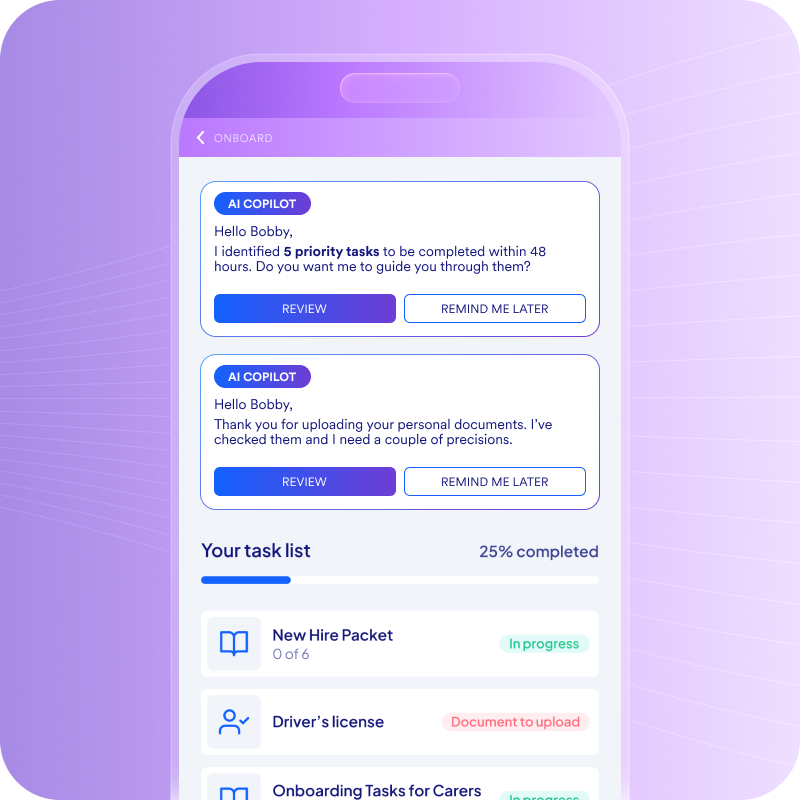
Faster ramp-up. Lower early attrition. AI onboarding built for speed, scale, and retention.
Top employers are already using Fountain’s Frontline OS to:
✅ Reduce turnover in the first 60 days
✅ Eliminate manual paperwork and task delays
✅ Accelerate new hire productivity with smarter workflows
Curious what smarter onboarding could unlock for your team?
Some state agencies are continuing to accept and hold applications during the hiatus. Confirm with your tax advisor before changing your process.
WOTC has lapsed before, during the 2004, 2013, 2014, and 2015 lapses, and Congress reauthorized each of those retroactively. The gap cuts both ways: employers who stopped filing during the 2004 lapse were denied the credit once Congress acted, while DOL noted that employers who kept filing through an earlier TJTC hiatus remained eligible.
State agencies are still processing the paperwork: Texas updated its WOTC page on September 5, 2026 confirming its unit will “continue to ACCEPT and PROCESS” 8850 and 9061 applications under a “HIATUS” status pending reauthorization, though it warns transition relief after a lapse “is never a guarantee.”
California EDD tells employers to keep submitting within required timeframes because 2026 WOTC applications “will be accepted and retained pending federal reauthorization.” Keeping the pre-screen inside the normal hiring flow, rather than pausing it, is what preserves that record if reauthorization comes through.
This is general information, not tax or legal advice. Your tax advisor should confirm how any reauthorization applies to your filings.
How WOTC works, in brief
WOTC requires employers to complete the pre-screen by the offer date, submit Forms 8850 and 9061 or 9062 to the state workforce agency within 28 days of Day 1, and wait for state certification before claiming the credit.
The IRS and DOL pages linked above hold the full instructions; here is the compressed version a hiring operation needs to design around:
- Pre-screen before the offer: The employer and applicant complete Form 8850, still accepted by state agencies during the hiatus, the eligibility questionnaire, on or before the day the job is offered. Completion is voluntary for the applicant, and the EEOC has stated that proper Form 8850 use doesn’t violate the ADA.
- Confirm eligibility: Forms 9061 and 9062 accompany the certification request. Form 9061 records individual characteristics before conditional certification; Form 9062 is used once the state has conditionally certified the applicant.
- File within 28 days: Submit both forms to the state workforce agency within 28 calendar days of Day 1. State agencies deny late submissions outright.
- The agency certifies, then you claim: The state issues an agency decision: a certification, a request for more information, or a denial. Once certified, the employer claims the credit on Form 5884, and can do so up to three years later from the return’s due date. Employers should retain certifications, wage records, and hours data in one centralized system throughout that window.
The time-sensitive pre-screening and submission steps begin in the hiring flow, between the first tap on a mobile application and the first payroll run; certification and claiming follow later. At high volume, manual processes raise the risk of errors in those earlier steps, which is why the pre-screen belongs before the offer stage, not at orientation, where it’s already too late.
Why WOTC capture breaks down at scale
Manual processes create preventable failures upstream, at the point of application, especially under hiring pressure.
Federal data shows the scale of it: in FY2023, state agencies issued 3,708,081 WOTC denials against 1,918,901 certifications, nearly two denials for every certification:
- The pre-screen gets skipped: A manual questionnaire can be overlooked when a location is hiring fast. Screening gaps begin when applications collect no WOTC eligibility information.
- The 28-day window is missed: Across dozens of sites and hundreds of monthly starts, central deadline ownership can reduce the risk that filing windows will be missed.
- Screening happens after the offer: A store manager who extends an offer on the spot and hands over paperwork at orientation has already lost the credit. The form signed a day late is defective no matter the candidate’s status under the offer-date requirement.
- Rehires and paperwork sprawl: Federal rehire rules bar the credit for anyone who worked for the employer at any time before the hiring date, so returning seasonal workers disqualify silently even if they were certified last season, and 8850s scatter across locations with no central record of what was signed or sent.
These errors occur during application, offer, and onboarding, before the employer ever files a tax return. 60% of candidates abandon applications because of length or complexity, based on CareerBuilder survey data, and a WOTC questionnaire tacked onto a separate desktop form, or handed out at orientation, inherits that same friction.
Put the questionnaire inside the hiring workflow instead: the flow surfaces and flags likely-eligible candidates, a person verifies eligibility, and the state agency certifies.
Building WOTC screening into the hiring workflow, not beside it
Add the pre-screen as a native step in the application or offer flow, not a separate compliance task that only gets run after the fact and can miss the offer-date deadline. A consistent program screens every new hire early enough to preserve potential eligibility across the whole applicant pool, which only happens when the mobile pre-screen is a required stage before the offer, with completed documents routed to the filing provider automatically instead of collected as post-offer paperwork.
- Screen at application or offer: Employers who put the eligibility questions inside the flow the candidate is already in, before the offer lands, hold the offer-date rule by design. No manager has to remember it during a Friday hiring push.
- Keep it mobile and fast: Many candidates complete applications on mobile devices. Because the form is voluntary, keep it concise, mobile-first, and in plain language so candidates can finish it in a few taps within the application.
- Flag and route, don’t decide: The workflow surfaces likely-eligible candidates for review. A person confirms the details and the state agency makes the certification call. The EEOC opinion letter is explicit that the ADA exception covers proper use of Form 8850 and doesn’t protect employers who misuse the information it collects, so eligibility flags inform paperwork, never hiring decisions.
- Centralize the documents: Every 8850 and 9061 lives in one auditable place, organized by location. When the state comes back with a request for more information, or when a retroactive reauthorization reopens 2026 hires, the record is already assembled.
- Integrate the filing, don’t rebuild it: The payroll or tax-credit provider that submits to the state agency and tracks certifications connects into the workflow instead of running beside it. The hiring system captures and flags; the provider files, tracks, and reports the credit.
Done this way, WOTC screening becomes a standard step in every hiring workflow, not a scramble once a hire is already made.
Employers who paused screening after the January 2026 lapse may be unable to preserve those claims if Congress renews WOTC retroactively without broad transition relief, the same risk the pre-2015 lapses already demonstrated.
How Fountain builds WOTC screening into frontline hiring
Fountain runs the frontline hiring workflow where the WOTC pre-screen has to live: the mobile application, the offer, and the onboarding paperwork that follows. Cue can help configure that pre-screen step ahead of the offer stage and surface the reporting, with a regional HR lead approving what goes live and reviewing likely-eligible candidates.
Three agents work that flow. Emma, Fountain’s AI 24/7 Support agent, already owns candidate Q&A and onboarding documents like I-9 and W-4, and Fountain can place WOTC pre-screening inside the hiring workflow and route likely eligible candidates for human review.
Anna keeps the funnel moving by screening and qualifying candidates through voice interviews around the clock, so an added pre-screen step doesn’t stall the pipeline, and Sam picks up post-hire engagement signals once WOTC-eligible hires are on the job.
A person confirms the eligibility details in every case, and the state workforce agency issues the certification.
Within Fountain’s Frontline Superintelligence, the agents act on the platform products. The ATS holds the mobile-first application and offer flow, and Fountain’s I-9 Center reports 40% fewer incomplete I-9s and a 99% E-Verify compliance rate from the same centralized mobile tasks and completion tracking a WOTC pre-screen needs.
Fountain also connects to the systems that file and certify: Walton Management Services determines eligibility and files with the government on the employer’s behalf, the Equifax WOTC platform does the same, and HCM and payroll connectors for ADP, UKG, SAP, and Workday round out Fountain’s integrations.
Eligibility is won or lost at the application, the moment a candidate accepts an offer on a phone in a stockroom or a loading dock, and an employer hiring thousands of frontline workers a month can’t chase that moment location by location. When the pre-screen is a native step, the offer-date and 28-day controls stop depending on any one manager’s memory, and the record is already there if Congress reauthorizes retroactively.
If WOTC screening is still riding on manager memory at your organization, book a demo to see the pre-screen, the offer step, and Emma’s document trail working together in one flow.
Frequently asked questions about the Work Opportunity Tax Credit
Is WOTC still available in 2026?
No. Authorization lapsed on December 31, 2025, and Congress had not enacted a renewal by September 2026. State workforce agencies are still accepting and holding applications for 2026 hires, and documented prior lapses ended in retroactive reauthorizations that preserved credits for employers who met the applicable filing requirements.
How much is WOTC worth per hire?
Between $1,200 and $9,600, based on the official per-hire credit range, depending on the target group and hours worked. The credit equals 25 percent of qualified first-year wages for 120 to 399 hours and 40 percent for 400 hours or more, with wage caps of $3,000 for summer youth, $6,000 for most groups, and $24,000 for certain disabled veterans.
When is Form 8850 due?
The applicant and employer sign it on or before the day the job is offered, and the employer submits it to the state workforce agency within 28 calendar days of Day 1. The IRS marked the form no longer in use in March 2026, but states including Texas and California continue to accept it during the hiatus.