Replacing a frontline worker costs about $7,000 on average, per Fountain’s Frontline Report 2025, or roughly 40% of their annual salary, per Gallup. Much of that spending is preventable, because the biggest causes of turnover are well understood: Gallup’s exit research finds that many workers who quit believe their employer could have kept them.
Most turnover advice points at post-hire culture, pay, and engagement programs. For frontline and hourly employers, the highest-leverage causes show up earlier: the lengthy application, the offer that lands a week late, the job that differs from the posting, the schedule that changes on less than 72 hours’ notice. Those are hiring decisions, and they shape retention before the first shift starts.
What is employee turnover, and which causes are preventable?
Employee turnover is the departure of workers an organization has to replace, whether they quit (voluntary turnover) or are let go (involuntary turnover). It differs from attrition, where a role is deliberately left unfilled. The rate itself is simple arithmetic, and the Managing Employee Turnover guide walks through the formula; this piece is about what drives the number up.
What matters for budgeting is the split between unavoidable and preventable turnover. Unavoidable turnover covers what an employer could not have changed, like relocations and life events. Preventable turnover covers what it could have, and it is a large share of departures: in Gallup’s exit research, many voluntary leavers say their manager or organization could have kept them.
Hiring shapes several of those preventable causes at once, setting job expectations, schedule design, and onboarding quality before a worker’s first shift.
The most common causes of employee turnover
Across retention research, the same handful of causes drives most voluntary departures, and hiring already touches several of them:
- Limited career growth: Advancement consistently ranks at or near the top of why people quit, so the posting and interview set a growth expectation the role then has to meet.
- Weak management: The manager relationship is one of the strongest predictors of retention. Work Institute’s 2025 Retention Report found management-related turnover among first-year employees rose from 7.4% in 2022 to 9.6% in 2024, so compare exit reasons by manager.
- Lagging pay: Pay that trails the local market stays a leading reason hourly workers leave, and the offer is where that number gets set.
- Feeling undervalued: A workplace where people feel unrecognized or disrespected pushes them toward the exit even when pay is competitive.
- Burnout and disengagement: Chronic understaffing and poor work-life balance wear frontline workers down fastest, and both usually trace back to how shifts are designed and staffed.
- Shaky onboarding: A large share of turnover happens in the first year, when unclear expectations and a rough start compound, so first-year survival is worth tracking by location and manager.
Compare 90-day turnover by manager for one high-churn role, and a hunch about weak management becomes a number next to each name. Do it early, because so much of this list is set before a worker’s second week: the posting frames growth, the manager relationship starts at the interview, and onboarding starts at the offer.
Why frontline turnover has different causes
For frontline and hourly workforces, the ranking reshuffles and the losses start before day one. The 2025 Fountain Frontline Report found 43% of new frontline hires gone within 90 days, so 90-day retention, split by location, role, manager, and hire source, is the number to watch.
Pay carries more weight here than the general list suggests: among blue-collar workers dissatisfied with their pay, 77% told Pew Research the pay is too low for the work (fielded October 2024). Schedule predictability matters nearly as much, and the direct manager relationship is a top predictor too, which is why an early warning sign should route to that manager the same day.
What most general advice misses is that frontline turnover often starts in the hiring funnel itself. A lengthy or unclear application drives candidates to abandon it, each interview stage adds a drop-off point, and a slow offer loses good candidates to a faster competitor. After the offer, the leak continues: an accepted candidate can still miss the first shift.
Candidate abandonment and first-shift no-shows never surface in an exit interview, yet each reopens a role the employer thought was filled, and thin screening only raises the odds of an early-quitting mismatch. Diagnose frontline turnover without the funnel and you miss where much of it starts.
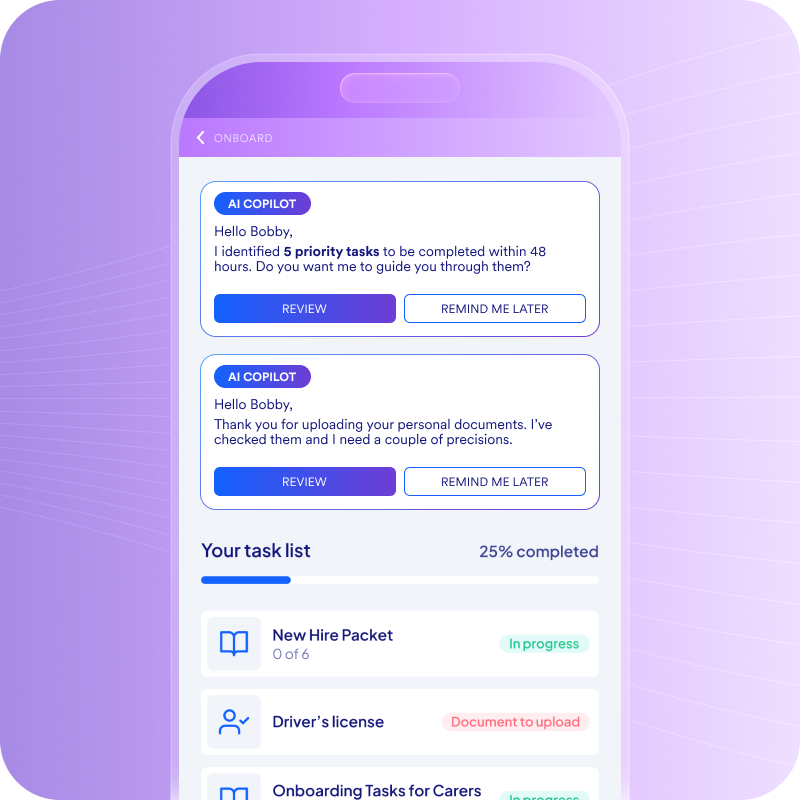
Faster ramp-up. Lower early attrition. AI onboarding built for speed, scale, and retention.
Top employers are already using Fountain’s Frontline OS to:
✅ Reduce turnover in the first 60 days
✅ Eliminate manual paperwork and task delays
✅ Accelerate new hire productivity with smarter workflows
Curious what smarter onboarding could unlock for your team?
What high frontline turnover actually costs
Replacement costs vary by workforce and methodology, but the per-head number lands in the thousands: about 40% of annual salary on Gallup’s estimate, and roughly $7,000 for a frontline hire on Fountain’s research. Neither counts the harder-to-measure losses in morale and knowledge that leave with every departure.
Those per-head numbers scale fast. In a 1,000-person operation, at $7,000 a replacement, losing half the workforce in a year runs about $3.5 million (illustrative arithmetic, not a benchmark). Fountain’s turnover cost estimator runs the same math on your wage, headcount, and turnover rate.
A company-wide average hides where that bill concentrates. Store-level effects are not uniform: analyzing 280 million shifts across 20 major U.S. retail chains, HBR found no single practice predicts retention at every location, so the cost has to be traced to specific sites, not treated as one blended rate.
An acceptable-looking average routinely masks a handful of locations churning far faster than the rest, and every replacement there is another round of new-hire paperwork, so constant rehiring quietly multiplies I-9 exposure at scale.
How to find the real causes in your operation
Finding the real cause means combining two data sources: exit and stay interviews, and hiring-funnel data. Interviews work best on a cadence, because employees who leave often had little proactive conversation about job satisfaction first.
Informal stay conversations around day 30 and day 60, plus a formal one near day 90, catch new-hire friction inside the window where early departures cluster, while exit interviews aggregated by manager show whose teams lose people fastest.
The frontline-specific move is to read your hiring funnel as retention data. Drop-off at the application points to length and clarity; drop-off between offer and first shift is worth interrogating on its own. Comparing turnover across four cuts shows which cohorts need a closer look:
- By location: each site can run on a different driver, so a company number tells you almost nothing about any one store.
- By role: 90-day retention varies by role type, and a blended rate hides both the healthy end and the bleeding one.
- By manager: one manager’s exit reasons against the unit average show whose team loses people fastest.
- By hire source: dividing a channel’s short-tenure departures by its total hires exposes which sources produce 90-day quitters.
Pull the last 90 days of hires and departures and group them these four ways, and a turnover spike stops being a mystery. It becomes a specific site, source, or manager with a fixable problem attached.
The causes you can fix at the point of hire
The biggest preventable losses can be addressed at the point of hire, and the evidence is strongest where the fix is concrete:
- Show people the real job before they take it. In an Arizona State study, 6% of hires given a realistic preview had quit at six months, against 22% of a control group (a 2006 university report, not a peer-reviewed trial). Honest previews can shrink your applicant pool, so they work best when it is healthy.
- Move faster on the offer. Interview-stage delays cost hires before an offer is ever made, so speed protects candidates you would otherwise lose to a faster competitor.
- Close paperwork and confirm the schedule before day one. Finishing documents and clarifying the role ahead of the first shift reduces onboarding friction, and the fuller offer-to-first-shift sequence lives in Fountain’s guide to onboarding and retention.
- Protect schedule predictability. Six-month turnover ran 24% among retail and food-service workers with two or more weeks of advance notice, versus 39% for those with less than 72 hours. The effect is not uniform, so treat notice as a lever to test by location, not a guaranteed fix. The fuller retention playbook lives in Fountain’s guide to attracting and retaining frontline workers.
- Screen every candidate consistently. The same questions asked the same way keep comparisons reliable and cut the mismatches that quit early.
None of this removes people from the decision. Agentic screening and scheduling can standardize questions, send offers within hours, and collect documents before day one, but the judgment calls, who to hire and how to respond when a new hire flags trouble, stay with people.
How Fountain helps cut frontline turnover
Cutting frontline turnover means connecting hiring, onboarding, engagement, and scheduling so early churn risk surfaces before the resignation, not after. That is what Cue, the orchestration layer across Fountain, is built for.
Instead of exporting spreadsheets to find which sites produce early churn, an operator can ask it directly: “Show me 90-day turnover by location, manager, and hire source for the last two quarters, and flag the sites with the biggest drop-off between offer and first shift.” Cue coordinates the work and surfaces the reporting, with managers approving what goes live.
Three agents do the work Cue coordinates, each aimed at a cause above:
- Sam runs the post-hire pulse inside the first 90 days, where frontline attrition concentrates, so a disengaged new hire is flagged while a manager can still act.
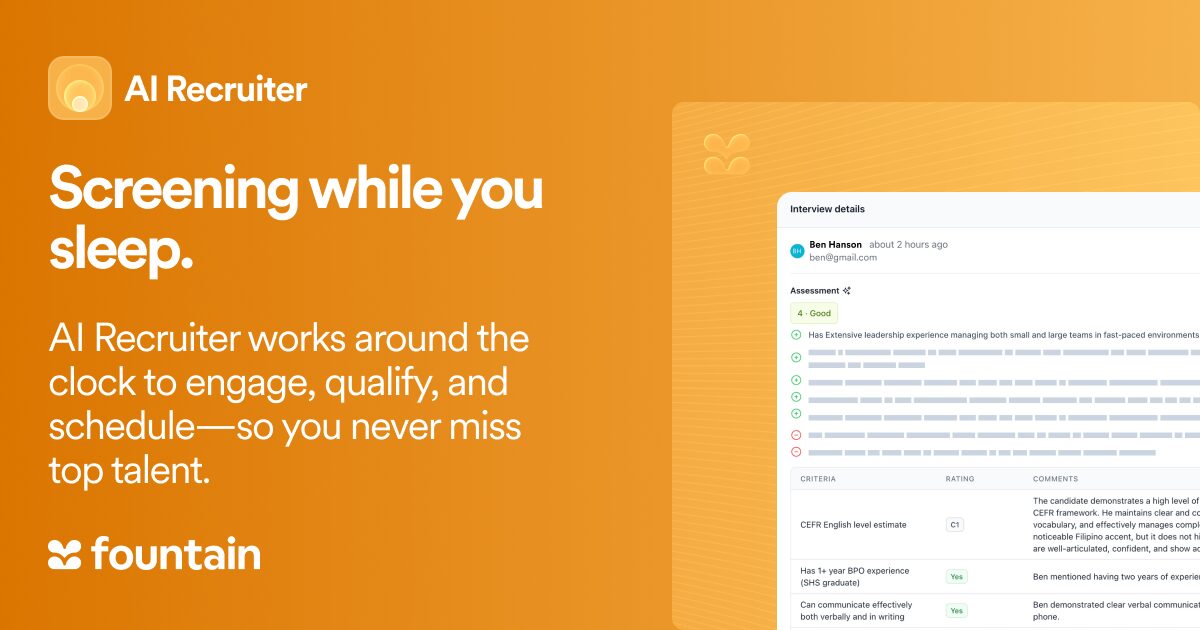
- Anna screens around the clock, so a candidate who applies at 9 p.m. is screened within minutes instead of waiting days, and every candidate gets the same questions. Anna scores and routes; recruiters still make the hire.
- Emma answers candidate questions and clears I-9, W-4, and onboarding paperwork before day one, so an accepted offer does not fail on missing documents.
Underneath the agents sit the products they run on: an applicant tracking system and CRM for sourcing and screening, Onboarding for pre-day-one documents, and Shift & Scheduling for the schedule access and swaps that protect predictability.
The payoff shows up in the funnel: Stitch Fix saw the share of applicants who pass background checks and show up on day one rise from 68% to 95% after moving to mobile-first workflows and automated screening.
Turnover that starts in the hiring funnel is a seven-figure line on the P&L long before it is a culture problem, and it is the most fixable kind, because the causes (mismatch, slow offers, day-one paperwork, unpredictable schedules) all live inside the flow you already control.
If your operation is ready to trace 90-day churn to the site, source, and manager creating it, book a demo to see how Cue, the post-hire pulse, and the offer-to-first-shift handoff map to your turnover causes.
Frequently asked questions about employee turnover causes
Why do so many frontline workers quit in the first 90 days?
Expectation mismatch is a common driver: new hires leave early when the day-to-day role is not what they expected. That gap is created during hiring, and it narrows with realistic job previews and structured onboarding that starts before day one.
Does faster hiring actually improve retention?
Faster hiring mainly prevents losses that happen before day one, when accepted candidates never arrive and interview stages create drop-off. The clearer link to post-hire tenure comes from realistic job previews, while pre-shift paperwork mostly reduces onboarding friction.
What is the difference between employee turnover and attrition?
Turnover covers departures an employer backfills, whether the worker quit or was let go, while attrition leaves the vacated role unfilled. Operators tracking frontline churn are almost always measuring turnover, because those roles get refilled.