
Exempt and non-exempt status is a pay-and-duties classification decision that legal counsel makes and periodically revisits, not a one-time label a job description can settle by itself. The operational risk isn’t the classification decision itself.
It’s what happens when that decision doesn’t travel with the role. A status set at the requisition can go stale the moment pay, duties, or reporting lines change, or get re-entered differently at the next location that reuses the same job template, and nobody notices until a review turns up daylight between what’s on record and what’s actually happening.
This is about the operational side of that problem: keeping one classification record moving with a role from requisition to payroll, so a manager, HR, and counsel can review it once, in one place, instead of reconstructing it after the fact at every site that opened the same position.
What “exempt” and “non-exempt” mean, operationally
Exempt and non-exempt are the two legal categories that determine which federal and state wage-and-hour protections apply to a role. Which category fits a given role is a legal determination, one counsel makes by weighing current facts against current law, and that determination can shift as the underlying facts do. That’s exactly why the label attached to a role needs to be treated as current data, not a tag copied from the last requisition.
That means a handful of fields have to stay attached to the role wherever it goes:
| Data point | Why it needs to travel with the role |
| Classification status (exempt/non-exempt) | Determines pay method and what needs to be tracked |
| Work location | Status can vary by jurisdiction and shift as rules are updated |
| Duties on file | Status is tied to actual duties, which can drift after hire |
| Reporting line and pay | Changes here are exactly what should trigger a re-review |
| Approver of record | Establishes who signed off, for counsel’s review |
Why is classification not a one-time decision?
Exempt classification depends on pay and duties factors that counsel evaluates against current federal and state rules, and those factors can shift without anyone changing the employee’s title. A raise, a schedule change, a new manager, or a move to a different location can all affect whether a role still matches the classification it was given.
None of that is visible from a job title alone, and none of it is something a hiring manager or a job template can resolve on its own. That’s a legal determination for counsel, which is exactly why the classification a role starts with shouldn’t be the classification it keeps by default.
Why frontline and working-manager roles are especially exposed
Frontline operations create more classification touchpoints than a typical corporate hiring pipeline. The same job title, shift lead, assistant manager, kitchen manager, warehouse supervisor, can exist at dozens of locations, each with a different mix of direct reports, hands-on hours, and local pay.
A title reviewed and approved at one site doesn’t automatically carry the same status at another, and a role’s duties can drift months after the classification was set, for instance when a manager loses a direct report or moves to a site where someone senior already runs the floor.
None of that is something a job template or a title can resolve on its own. It’s why treating classification as a record that gets reviewed and re-confirmed, rather than a label copied from the last requisition, matters more in frontline hiring than almost anywhere else in the business.
Common ways the record goes stale
Most classification drift doesn’t come from a single bad call. It comes from the record not keeping up with a role that keeps changing.
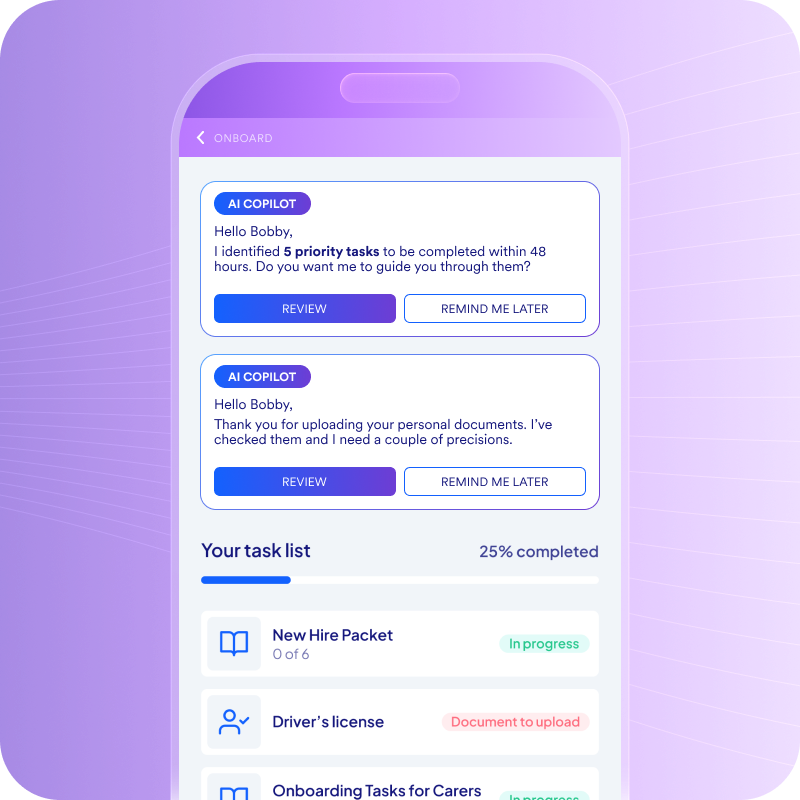
Faster ramp-up. Lower early attrition. AI onboarding built for speed, scale, and retention.
Top employers are already using Fountain to:
✅ Reduce turnover in the first 60 days
✅ Eliminate manual paperwork and task delays
✅ Accelerate new hire productivity with smarter workflows
Curious what smarter onboarding could unlock for your team?
- Treating salary and classification as the same thing: A pay method and a legal status aren’t interchangeable, and a job template that conflates them is a common way a status goes stale.
- Relying on a title instead of the duties on file: The label on a role, not the actual work, is what counsel reviews when a question comes up.
- Applying one classification across different locations: A role approved at one site can look different at another, and copying the tag forward skips that comparison.
- Leaving a role’s classification untouched after its duties, pay, or reporting line change: Those changes are exactly what should route back to a review, not get handled as isolated updates elsewhere.
- Leaving bonuses or shift differentials out of pay records: Those figures affect how a role’s pay is calculated later, and if they’re missing from the record, nobody can reconstruct the actual number.
- Letting time and duty records go incomplete: A review is only as good as the record behind it, and gaps make that record harder to trust.
- Confusing exempt vs. non-exempt with employee-vs-contractor status: The contractor question comes first and is a separate analysis, not a substitute for this one.
A suspected misclassification is a conversation for counsel, not a payroll toggle. It usually touches back pay, the record on file, and potentially other employees in the same job classification, so it belongs in legal review before anyone changes a paycheck or a pay code.
When a role’s classification does change, the update needs to land everywhere at once, pay method, timekeeping, and the reason for the change, so it isn’t corrected in one system and left stale in the rest.
A periodic compliance review across requisition, offer, and payroll data is a lower-stakes way to catch that drift before any one role forces the question.
How Fountain keeps classification consistent across frontline hiring
Fountain keeps one approved role, pay, location, and classification record moving from requisition to payroll, so a status set once doesn’t have to be reconstructed at every location and pay period.
Cue, Fountain’s orchestration layer, is where an HR director can type “Flag every open req where the role, pay, or location has changed since the classification was last reviewed, and list the hiring manager on each,” and get back a review queue instead of a manual search.
Cue coordinates the agents behind that record: Emma runs the compliance and paperwork trail, collecting I-9, W-4, and direct deposit forms from a new hire’s phone with an audit log for every step, while Anna and Sam keep the same worker record current from application onward.
A manager still approves every offer and exception, and the classification decision itself stays with managers and counsel.
That one record moves through the hiring stack without being re-keyed:
- Requisition: approved role, pay, work location, classification status, approver.
- Offer and onboarding: the same fields, carried forward, not re-entered.
- Payroll: identical job, department, manager, and classification data, synced through integrations like Fountain’s ADP Workforce Now connection so downstream workflows launch without a second entry.
Fountain Compliance and the ATS hold that record and produce it for counsel or auditors on request. They don’t decide who is exempt or calculate overtime; that call stays with managers and counsel, and Fountain’s job is keeping the data under it consistent, so a role flagged for review at the requisition never quietly reaches payroll unreviewed and never repeats the same way at the next site.
If your team is only catching classification questions after the offer goes out, that’s the record worth fixing first. Book a demo to see Cue, Emma, and the ATS carry one approved role, pay, and status record from requisition to payroll.
Frequently asked questions about exempt vs. non-exempt classification
Why does classification status need to travel with the job record?
Classification is usually set once, at the requisition or offer stage, but the record it depends on, pay, duties, location, and reporting line, keeps changing after someone is hired. If the status doesn’t travel with those changes, whoever reviews it later has to reconstruct the history instead of reading a current record.
What should trigger a review, not just a title change?
A change to pay, duties, reporting structure, or work location can all affect whether a role still matches the classification it was given. None of those changes are visible from a job title alone, which is why they need to route back to the classification record rather than being handled as isolated updates in payroll or scheduling.
Who makes the classification call?
Managers and hiring teams supply the data: the role, the pay, the duties, the location, and when any of it changes. The classification decision itself is a legal determination that belongs to counsel. Keeping one accurate, current record is what makes that review possible without reconstructing it from several systems first.