Ban-the-box takes its name from the criminal-history checkbox that used to sit on nearly every job application; the laws remove that question so candidates are screened on qualifications first, before a record ever enters the picture. A retailer or delivery operator hiring across dozens of states must follow a different version of that rule in nearly every one, layered with local ordinances in many of the cities across its footprint.
The count that actually scopes a private employer’s exposure is smaller than the total number of fair-chance jurisdictions, since some statewide laws bind only government jobs, and it keeps shifting as laws are enacted and amended.
This guide covers what the laws require, where private employers are covered, when you can ask about a record, and how to run it consistently at volume.
What is ban the box, and how is it different from fair chance hiring?
Ban-the-box laws remove the conviction-history checkbox and related questions from the initial job application, so a candidate is evaluated on qualifications before anyone sees a record. These laws delay criminal-history questions until after an interview or a provisional job offer, depending on the jurisdiction.
Fair chance hiring is the broader policy umbrella ban-the-box sits inside: it can remove conviction questions from applications, delay background checks until later in the process, and require individualized consideration of the record against the job sought. Ban-the-box is the first element, not the whole policy; the fuller umbrella also brings “unique pre-adverse and adverse action letter requirements, and other requirements well beyond the box.”
These laws create particular operational complexity for frontline employers in retail, QSR, logistics, and staffing. A corporate recruiter with 15 open roles in one office checks one statute once. A QSR brand with 750 locations or a staffing firm placing workers at 20 client sites runs the same application through dozens of jurisdictions, and one non-compliant template can reproduce the same error for applicants at every affected site.
How to design a location-aware screening workflow
Coverage varies by state, county, and city, and it keeps shifting as laws are enacted and amended, so checking at the state level alone can miss a stricter local ordinance or a recent amendment.
What applies to a given req depends on where it’s located, not on where the company is headquartered, and some statewide laws reach only government jobs — a private employer’s real exposure is narrower than the headline count of “fair-chance jurisdictions” suggests, and mapping it accurately is a job for employment counsel, not a blog post.
The shape of the workflow that gets built around that mapping, though, holds steady across jurisdictions:
- Keep the criminal-history question off the initial application, everywhere. No jurisdiction covered here allows it on the first form a candidate fills out.
- Gate the record check behind the right stage. Depending on the jurisdiction, that’s a conditional offer, the interview, or simply keeping the question off the initial written application while allowing it sooner otherwise — which one applies is a counsel question, not a company-wide default.
- Route every record that surfaces to a documented individualized assessment. Offense severity, time since the conviction or completed sentence, and job relevance form the baseline; state and local law can add its own paperwork on top.
- Give the candidate whatever notice and response window the jurisdiction requires before any adverse decision, and log it.
- Apply the lookback period and any role-based exemption the jurisdiction sets — these differ by jurisdiction and by check type, and change often enough that a guide like this one can’t responsibly hand them to you as fixed numbers.
None of these five steps is optional at scale, and none of the specifics belong in a guide like this one: employment counsel should define the exact rule for every jurisdiction where the company hires. What a workflow can do is make sure the same sequence runs the same way for every candidate, in every location.
That includes holding the pre-employment screening process that follows to the same clock, so it never starts earlier than the applicable timing rule allows — and a third-party report still brings its own separate notice requirements under the FCRA, on top of whatever the jurisdiction’s fair-chance process already requires.
A smarter, connected way to hire, engage, and retain frontline teams
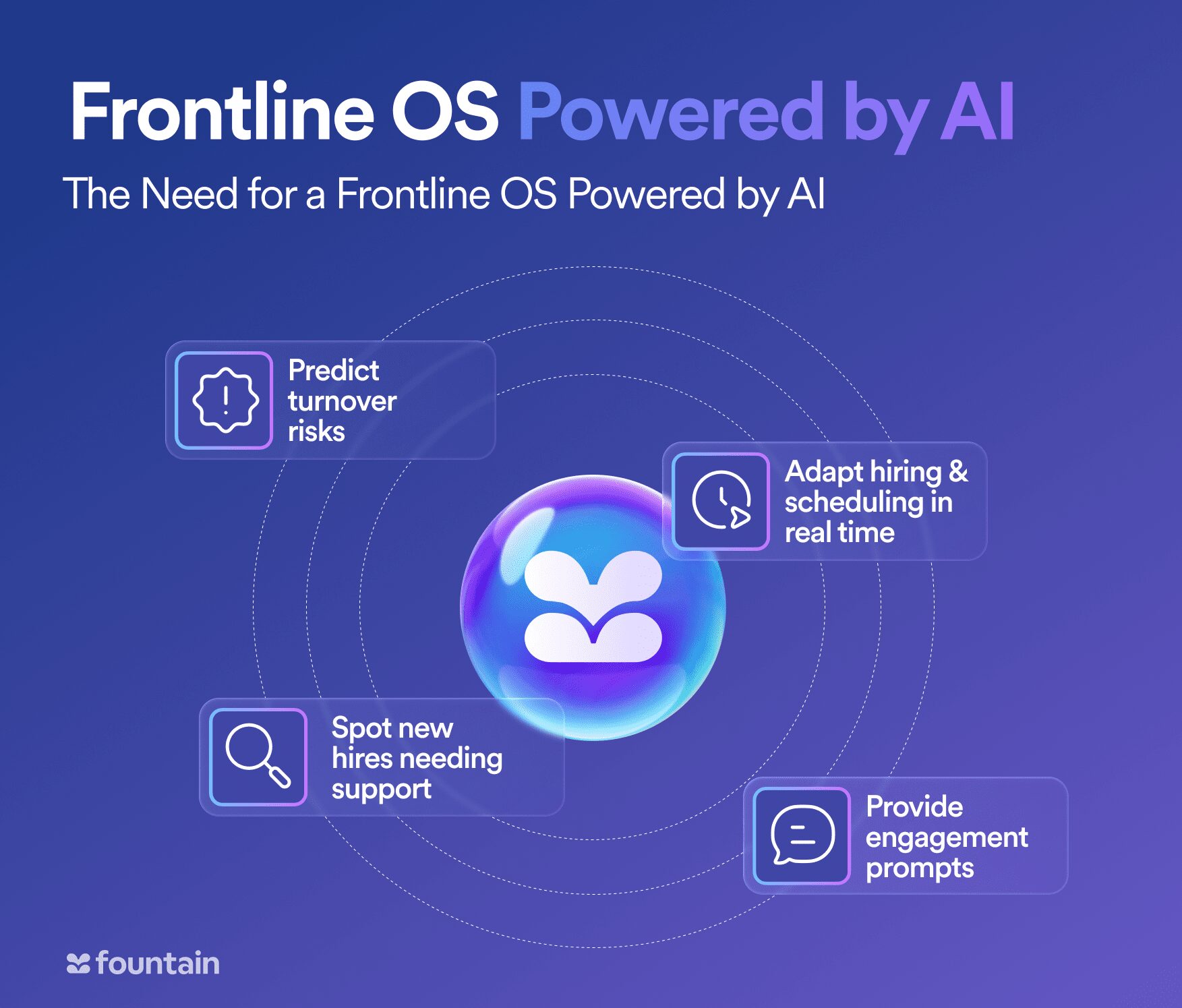
Centralize scheduling, hiring, onboarding, engagement, and analytics in one AI-powered platform built for the frontline workforce. Fountain OS gives leaders the real-time insights and tools they need to predict turnover, boost retention, and streamline high-volume operations.
Automate repetitive tasks, identify at-risk employees early, and make data-driven workforce decisions with a unified solution designed to help frontline teams thrive.
Where ban-the-box compliance breaks at high volume
Manual tracking works until the req count outruns the person tracking it. Jurisdictional requirements can differ in when an employer may ask, which offenses may be considered, how far back it may look, and which employee thresholds determine whether a location is covered.
High-volume hiring compounds the operational challenge because the rule for a hire often lives in a spreadsheet while the application lives in the ATS and the check fires from a vendor portal.
- Per-jurisdiction variance: The right rule has to be selected per hire and per location, not set once for the company, since timing, considered offenses, and lookback windows all differ by jurisdiction.
- Application drift: A single non-compliant template, cloned across postings, reproduces the same conviction-question violation everywhere it’s used.
- Sequencing errors: A background check fired before the conditional offer is the most common at-scale mistake; auditing every active workflow and holding checks until the right stage is the fix.
- No audit trail: When consent, timing, and assessment aren’t logged per candidate, you can’t prove compliance later.
New York City treats even stating that a background check is required for a position as a prohibited pre-offer act under its Fair Chance guidance. Washington now requires a documented written decision with “specific documentation as to the employer’s reasoning and assessment of each of the relevant factors.”
At volume, a small per-application error can become a pattern across thousands of candidates. Dollar General paid $6 million to settle an EEOC class race-discrimination suit involving its use of criminal background checks.
Federal policy now directs agencies to deprioritize disparate-impact enforcement, while state agencies continue to enforce their own fair-chance laws: California’s Civil Rights Department settled with Ralphs for $200,000 on July 9, 2026 and with FedEx for $85,000 on June 3, 2026, each with training and hiring-practice obligations attached.
This article is general information, not legal advice; the jurisdiction mapping for your footprint belongs with employment counsel.
How Fountain supports location-aware screening workflows
Fair-chance requirements vary by work location and hiring stage. Fountain can help teams keep criminal-history questions out of the initial application, gate configured checks behind the appropriate workflow stage, route assessments for human review, and retain an audit trail. Employment counsel should define the rules for each jurisdiction.
Fountain uses work location and hiring stage to control when an application asks questions or starts a check inside the ATS. Cue can carry an approved workflow change across every product from one plain-language instruction, the kind a TA director might type: “Flag every open req in a ban-the-box state where the application still asks about convictions, and hold those postings until I approve the fix.”
Fountain workflows can route approvals where configured, so an offer or exception doesn’t move forward without the right person signing off.
The structure that survives an audit looks the same regardless of vendor: one application template with no criminal-history question, a jurisdiction rule attached to each location rather than each company, the background check gated behind the conditional offer, every assessment routed to one reviewing group, and every notice timestamped and retained for the longest period any covered jurisdiction requires.
Fountain applies that structure by location through its workflow configuration tools, and once the offer is accepted, Onboarding guides new hires through I-9 and W-4 paperwork and tracks completion by location, role, and region. At Stitch Fix, the percentage of applicants who pass background checks and show up on day one rose from 68% to 95%, alongside a drop in median time-to-hire from nearly three weeks to nine days.
Getting this right at volume means the same gate holds for every candidate in every location, not a rule re-invented per req.
If your postings and check triggers still need that kind of audit, book a demo to see how Cue maps a configured workflow to your footprint.
Frequently asked questions about ban-the-box
Does ban the box apply to private employers?
Yes, in the states and cities that extend coverage to private employers — coverage isn’t universal, since some statewide laws reach only government jobs. Which rule applies depends on where each requisition is located, and in many jurisdictions on the employer’s size, and the map shifts as laws are enacted and amended, so confirm current coverage for your footprint with employment counsel.
What are the penalties for a ban-the-box violation?
Penalties vary by jurisdiction, can escalate for repeat violations, and a settlement can carry training or policy-reform obligations on top of any monetary penalty. The exact exposure for a given location is a question for employment counsel, not a fixed figure this guide can responsibly give you.
Is there a federal ban-the-box law?
The Fair Chance Act, effective December 20, 2021, bars criminal-history inquiries before a conditional offer, but it binds only federal agencies and federal contractors for positions tied to contract work as defined by the federal contractor statute. For private employers outside covered federal contract work, ban-the-box obligations come from state and local law.