When night, weekend, and holiday shifts go uncovered, employers often fill them by extending people already on the schedule, which adds overtime and pressure to the next schedule. Instability then pushes people out: among young service-sector workers in a Shift Project study, 65% of those with the most unstable schedules left their jobs, against 40% of those with the most stable schedules.
Every departure reopens the hard-to-fill shifts. This guide covers how shift differential pay works, how it connects to overtime, and how to use it with predictable scheduling so overtime stops replacing people who leave.
What is shift differential pay?
Shift differential pay is extra pay for hours worked outside a standard daytime schedule, such as evenings, overnights, weekends, and holidays. SHRM describes differentials as additional pay premiums “to compensate employees for working hours and shifts other than regular day shifts (typically 8a.m. to 6p.m., Monday-Friday).”
Employers use differentials to staff undesirable shifts without repricing the whole workforce: a $2 overnight premium reaches only the hard-to-staff hours, while a $2 raise reaches every hour. In a 2022 WorldatWork survey, 61% of 871 organizations offered shift differential pay, including 91% in manufacturing and 74% in health care and pharma.
A differential is triggered by when the work happens. Overtime is triggered by hours worked: as of September 2026, the Department of Labor says covered employees must receive at least time and one-half their regular rate for hours over 40 in a workweek.
Holiday pay, by contrast, is generally a matter of agreement between employer and employee, even for time not worked.
Is shift differential required by law?
Generally not at the federal level. As of September 2026, the U.S. Department of Labor states that the Fair Labor Standards Act (FLSA) does not require extra pay for weekend or night work, and it calls the question “a matter of agreement between the employer and the employee (or the employee’s representative).”
Where an obligation exists, it typically comes from an employment agreement, a collective bargaining agreement, or an employer’s written policy, and state or local rules may differ from the federal baseline. Federal employees are a separate case: as of September 2026, the Office of Personnel Management lists 10% night pay for regularly scheduled night work by General Schedule employees under Title 5.
This section is informational, not legal advice. Laws change, and your obligations depend on your location, workforce, and agreements, so confirm them with employment counsel.
How is shift differential calculated?
Two methods cover most employers: a flat dollar amount per hour or a percentage of the base rate. A 2010 Culpepper survey reported by SHRM found them nearly evenly split, 49% flat and 47% percentage, though it predates today’s market.
A worker earning $18 an hour with a $2 flat night differential makes $20 for each night hour, or $160 for an eight-hour shift. With a 15% differential on a $20 base, the premium is $3 an hour and the same shift pays $184.
The harder question is the partial shift. If a shift runs from 2 p.m. to 10 p.m. and the evening window opens at 6 p.m., does the premium cover the four hours inside the window or all eight?
Employers use three documented approaches:
- Some pay hour by hour.
- Others pay the whole shift once a threshold is met, as the University of Rochester does for the entire shift after “four or more consecutive hours between 6 p.m. and 11 p.m.”
- A third group uses a majority-of-hours rule and pays the full shift only when more than half the hours fall inside the window.
Any of them can work. Leaving the rule undefined and letting each site manager decide is what fails. Many teams document the window, rate, and hour-by-hour or whole-shift rule for each partial shift, so two managers don’t end up paying the same shift differently.
How does shift differential affect overtime?
Differentials and overtime meet at the regular rate, and for employers that is mostly an operational concern. As of September 2026, the Department of Labor’s regulation on the regular rate lists “such extra premiums as nightshift differentials (whether they take the form of a percent of the base rate or an addition of so many cents per hour)” among the payments the FLSA requires to be included in it.
In practice, a worker who regularly earns differentials can cost more per overtime hour than their base rate suggests, so a night shift covered with overtime is often the expensive way to staff it. How a specific pay setup flows through to overtime is a question for payroll and employment counsel.
How to set a differential that fills shifts without inflating overtime
Many employers treat the differential as a cost decision, targeting it at shifts and locations with proven gaps and comparing it with what the open shift already costs. No universal rate exists, and published benchmarks are directional at best, so they weigh the premium against four costs:
- Price the overtime you would pay otherwise. An uncovered hour handed to someone already at 40 hours is paid at overtime rates, which can mean roughly $27 or more on an $18 base, versus $20 for the same hour covered by a scheduled worker on a $2 premium (illustrative figures).
- Compare agency labor at its full bill rate. Contract staff bill at a markup over employee pay.
- Weigh the revenue at risk when a shift stays short. An understaffed Saturday night can lose sales or output that a well-placed premium would protect.
- Count the turnover that hard schedules create. Fountain’s 2025 Frontline Report puts the cost of replacing a frontline worker at about $7,000 once recruiting, training, and lost output are added up.
Against those costs, a $2 premium on 36 night hours, or $72 a week, is cheap if it prevents one overtime shift or one resignation, and expensive if it lands on shifts that were never hard to fill. A common approach is to pilot it on the one window with the clearest recurring shortfall, then measure coverage and overtime.
Pay is only one lever. Many teams also list the premium and exact shift window in the job ad, post schedules earlier, and let workers swap shifts from their phones. The Shift Project found 24% six-month turnover with at least two weeks’ notice, against 39% with under 72 hours, and scheduling predictability is a core retention lever for hourly teams.
What belongs in a shift differential policy?
Employers commonly define seven things in a written policy, with the wording confirmed by payroll and employment counsel:
- Eligible roles and exact time windows: The job classifications covered and the clock times, to the minute, including when the weekend starts and ends.
- Rate type and amount: Whether each rate is flat or percentage-based, with separate lines for weekend and night rates if they can combine.
- Partial-shift and stacking rules: Whether the policy runs hour by hour, uses a whole-shift threshold, or follows a majority-of-hours rule, and how a weekend overnight stacks. Rochester’s stacked rate table sets weekend night pay at $2.75 an hour, the $1.75 weekday night rate plus the $1.00 weekend rate.
- Overtime treatment: How the differential is handled for overtime-eligible employees, with wording confirmed by payroll or counsel so payroll doesn’t have to infer it.
- PTO, holidays, and shift swaps: Georgetown excludes paid leave from differential pay, while the University of Florida includes it. Swap rules often settle who gets the premium.
- Payroll codes: Many employers give each differential its own earning code (Florida’s evening premium code is SEP) so payroll can track it separately from base pay, with payroll confirming how it is applied.
- Review cadence: Some employers check the rate against fill-rate and overtime-by-shift data so it follows the gap.
Aligning scheduling, timekeeping, and payroll around one written definition of “night shift” helps avoid pay errors and grievances, since a swapped weekend overnight can otherwise be coded differently. This is informational, not legal advice; payroll and employment counsel should confirm the wording.
How Fountain helps turn coverage gaps into filled shifts
A premium only works if the right worker sees the open shift in time. Cue is the intelligence that coordinates Fountain’s agents and products from a plain-language request, so a scheduler can ask, “Which night shifts at our Dallas distribution center are still open next week, and who is available and qualified?”
A coverage gap then moves through three steps:
- Cue forecasts staffing needs by site and shift and surfaces the shifts likely to run short before they open.
- In Shift & Scheduling, open shifts can be offered to available, qualified workers before anyone at 40 hours is extended into overtime, and managers approve any premium or exception because Cue does not set pay.
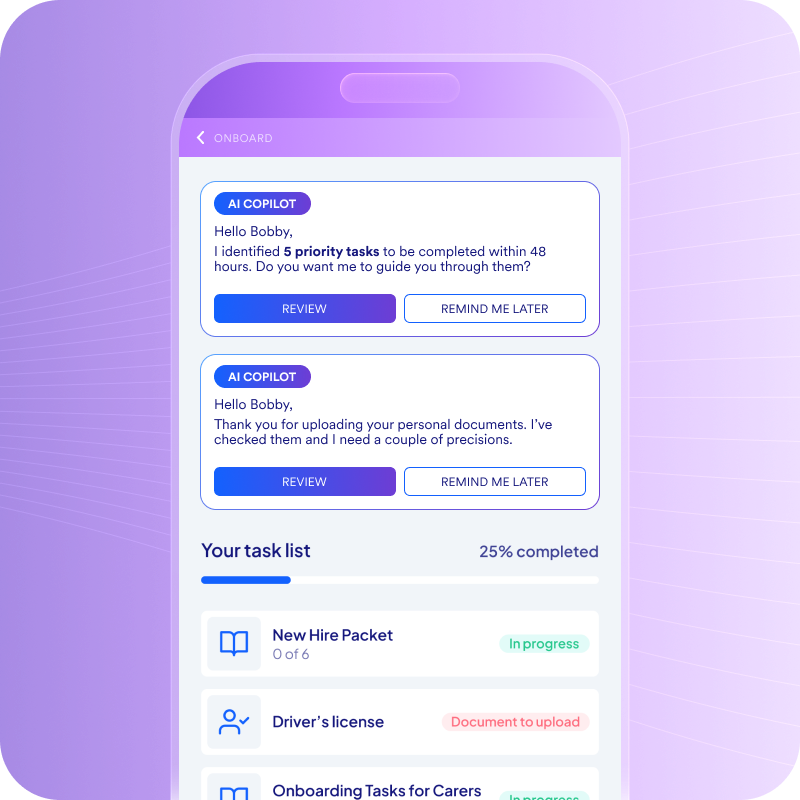
- When no one on the roster can take the shift, Anna can phone-screen applicants at any hour so recruiters review qualified candidates sooner.
Marsden Services, a facility-services provider, cut its vacancy rate at one client location from 18% to 6% using Fountain’s ATS, a vacancy result rather than a shift-differential one. Fountain works alongside your payroll system, which sets and calculates differential pay.
A differential makes the hard shift worth taking. Knowing which shift will be hard, and having a qualified worker to offer it to, keeps the premium from becoming overtime by another name. If your open shifts still default to overtime, see Cue surface next week’s gaps, Shift & Scheduling offer them, and Anna cover the roles your roster can’t.
Book a demo to run it on your own schedule.
Frequently asked questions about shift differential
What does a 10% shift differential mean?
The premium equals 10% of the worker’s base hourly rate for each qualifying hour. A worker earning $20 an hour makes $22 inside the window.
Is shift differential required for salaried employees?
Generally not under the FLSA. As of September 2026, the FLSA does not require differentials for anyone, and Department of Labor regulations say an exempt employee can receive additional compensation “on any basis” without losing the exemption, provided the guaranteed weekly salary is still paid.
Is shift differential taxable?
Generally, yes. Shift differential is paid as part of wages, and as of September 2026 the IRS employer’s tax guide treats wages as generally subject to federal income tax withholding, Social Security, and Medicare taxes. State and local rules vary, so payroll can confirm treatment.