
The best way to find employees online is a small, deliberate channel mix: one high-traffic aggregator, an hourly-specific platform where the role fits, a careers page built for Google job search, and owned channels (referrals, rehires, a reusable candidate database) that keep producing after the spend stops. It keeps reach broad without making the pipeline depend on one borrowed channel.
Channel selection is the easier half of the problem. In the 2025 Fountain Frontline Report, 57% of frontline candidates name slow hiring as their top frustration and 52% point to ghosting, so whoever replies first usually wins the hire. Size the mix by volume, urgency, location count, and local brand strength, then build response speed to match.
What does it mean to find employees online?
Finding employees online means running sourcing through digital channels so candidates can discover a role, apply, and get a response without a paper application or a walk-in visit. The distinction that matters is posting versus sourcing: posting pushes a listing to a board and waits, while sourcing runs channels that produce applicant flow on purpose.
The frontline version differs: higher volume, shorter decision windows, mostly mobile applications, a mostly local pool. A recruiter filling a handful of salaried roles can afford a multi-week process. A logistics operator filling 50 warehouse roles across three sites cannot, so the plan has to pair local reach with same-day response capacity.
Where frontline candidates actually look online
Six channel types carry real hourly volume, and each solves a different reach-versus-fit problem. Choose by role, location, and urgency rather than traffic alone, assigning one primary channel and one backup per role and location.
- General aggregators (Indeed, ZipRecruiter): The widest reach comes with the most competition per applicant, so a sponsored listing often sits beside a dozen near-identical roles. ZipRecruiter adds volume at inconsistent frontline quality, and both revise visibility rules periodically, so organic placement is not a stable plan.
- Hourly and shift-specific platforms (Snagajob, JobGet): These match on availability and location rather than resumes, which is how hourly candidates differentiate themselves. The pool is smaller, but role fit is better because applicants are already after shift work.
- Facebook Local Jobs, Marketplace, and community groups: Posting is free, candidates connect through Messenger, and local groups reach people who never open a job board. Scale is limited and it rarely connects to an applicant tracking system, so it supplements rather than carries.
- Google for Jobs: This is a distribution layer rather than a board. Google indexes JobPosting structured data from your careers page and sends applicants straight to your site at no media cost, so your posting infrastructure either qualifies or it doesn’t.
- Niche and geographic boards: These earn a slot where the role is gated by CDL class, clinical licensure, or language, which general aggregators cannot filter for. Volume stays low, so it supplements the mix rather than carrying it.
- Your careers page: This is the only always-on channel you own outright, and applicants who land on it already chose you rather than a search result. It produces nothing by itself, so something has to drive traffic there.
Reach is not what separates these channels. Response speed and role fit are, which is why professional networks and legacy general boards rarely earn a slot for hourly roles. If budget is the constraint, start with the free job boards that still produce applicants and add paid reach once simultaneous openings outrun free traffic.
Writing a job post that gets found and gets applications
A frontline job post has two jobs: surface in search, then convert the click. Most fail the first with internal titles nobody searches, and the second with corporate biography ahead of the pay range. Put the searchable title, pay range, schedule, location, and application time in the opening screen.
Titles do the search work. Short, plain-language titles outperform strings of internal codes and promotional language, and Google’s job search eligibility rules ask you to keep the title field to the job title alone.
Pay range does the conversion work: in SHRM research published in March 2023, about 70% of organizations listing pay ranges reported more people applying and 66% reported better applicant quality. Shift specifics matter as much, because hourly earnings depend directly on hours.
Length is a conversion control too: a five-minute mobile application beats a long multi-step form for candidates applying between shifts. Open your highest-volume posting on a phone and cut every step ahead of pay, schedule, location, and availability.
A warehouse posting rewritten
The gap shows up fastest side by side: an internal-requisition version of a warehouse role, then the same job written for search and a phone screen.
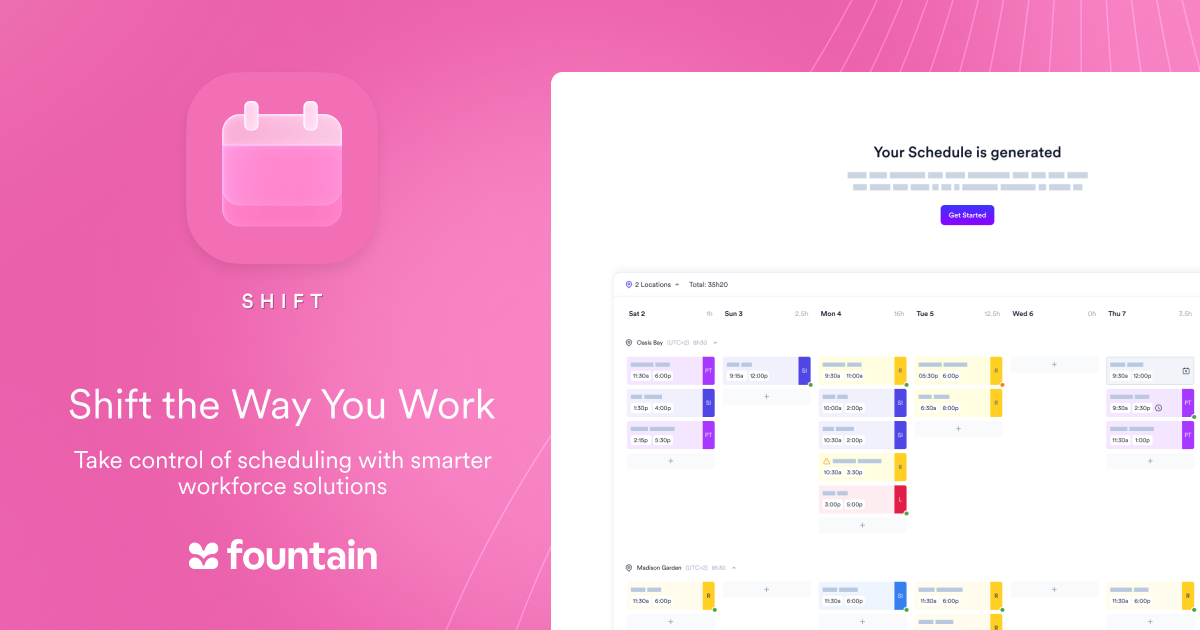
Smart, flexible scheduling built for frontline teams—because flexibility is essential, not optional.
Optimize your frontline workforce management with Fountain Shift—the all-in-one mobile scheduling solution designed to streamline operations and enhance employee satisfaction.
Automate shift creation, minimize errors, and empower your team with mobile access to schedules, time tracking, and seamless shift management. Experience the future of workforce scheduling today.
Job Req #20261138, Fulfillment Team Member II (DAL-WH2)
We are seeking motivated self-starters to join our Dallas-area fulfillment team. Responsibilities include, but are not limited to, order fulfillment activities in accordance with established standard operating procedures. Competitive compensation commensurate with experience. Interested applicants should submit a resume and complete our online assessment battery.
The same role, rewritten:
Warehouse Associate in South Dallas, TX $18–$20 per hour, paid weekly. Full time, Monday–Friday, 6:00 a.m.–2:30 p.m. Pick, pack, and load customer orders at our South Dallas distribution center. No resume or prior experience required; training happens on site, and candidates must be able to lift 50 pounds. Apply from your phone in under five minutes and pick your own interview time.
The rewrite is roughly half the length, and it answers what the job pays, when shifts run, and how fast a candidate can start, all in the first phone screen. The $18–$20 range, the weekday day shift, the 50-pound lift, and the five-minute application work as filters instead of hidden facts, so unavailable or unqualified candidates self-select out before your team spends time on them.
Run the same rewrite on one open role this week.
Why posting more isn’t the bottleneck
Most employers with a volume problem don’t have a discovery problem. Frontline candidates apply to several employers in one sitting and take the first concrete offer that reaches them, so the real constraint is how fast you answer. The 57% naming slow hiring and the 52% citing ghosting describe that gap from the candidate’s side.
Adding a fourth job board to a pipeline that takes three days to answer an application funds the leak instead of fixing it. Response capacity is the fix: agentic screening that acknowledges and qualifies an application on arrival, self-scheduling that removes the phone tag between a manager’s calendar and a candidate’s shifts, and automated follow-up on stalled candidates.
Turn on an acknowledgment, add knock-out questions, and connect interview slots to manager calendars before buying more traffic.
Say an application lands at 11 p.m. The system acknowledges it within minutes, runs the qualifying questions, and sends interview slots the candidate books at midnight, so the manager opens a shortlist the next morning rather than a raw overnight inbox.
These systems screen, route, schedule, and flag exceptions; managers approve offers and handle the judgment calls. The candidate hears back the same day instead of the third, which is the entire margin in high-volume hiring.
Sourcing channels you own
Everything above depends on paid or borrowed reach. Owned channels keep producing after the spend stops, and they are why the second time you hire for a role should be cheaper and faster than the first. It usually isn’t, because nobody kept the list.
Referrals carry the most leverage. NBER research on employee referral programs, published in 2019, found they reduced attrition by 15% and cut labor costs by up to 2.8%, more than a passive “send us names” policy earns. Extended referral programs, which accept referrals from people who aren’t on your payroll, widen the funnel further: SHRM reported in 2019 that 55% of companies accept referrals from nonemployees such as customers or clients.
Rehires and reactivation reach people who already know the job or already passed screening. Academy of Management Journal research published in 2021 found boomerang employees can outperform new hires during their initial spell, and a returning worker already knows the shift patterns and systems.
Past finalists who lost out narrowly are pre-screened, but only if their applications live in a database you can requery. Build one reactivation list for your most-hired role and one referral campaign against it.
Choosing the right mix for your volume, urgency, and footprint
The right mix depends on three things: how many hires, how fast, and across how many locations. Free channels stop producing enough applicants once you carry more than a few openings at once, so free posting is a starter channel, not a capacity plan. Referrals have the opposite problem, scaling with headcount, so a new market starts at zero.
Three profiles cover most frontline footprints, each a starting mix to tune against your own cost-per-hire. Urgency decides how much you can skip: fill-this-week roles start with paid campaigns and same-day screening, while a quarter-long window leaves room for referrals and organic channels.
- Single-location seasonal hiring can still run on free channels. Low simultaneous volume keeps the free tier viable, so combine organic aggregator visibility, Facebook Jobs and community group posts, and a staff referral push started well before peak.
- Multi-site steady replacement hiring needs paid reach plus owned reactivation. Sponsored aggregator spend and an hourly platform cover discovery, a careers page with Google markup captures intent, and reactivating past applicants holds down the rest. Automated screening, scheduling, and follow-up save the most time here.
- A new-market launch has to buy discovery outright. With no local brand or referral network, paid aggregator volume and geo-targeted campaigns carry the funnel while fast screening converts it. Time-bound launches are also where project-based outsourcing beats permanent recruiting headcount.
The owned channels compound across cycles while the paid ones reset to zero, so the mix should shift toward owned every year you run it.
How Fountain finds frontline employees online at scale
Fountain runs this loop as one system, which is the difference between a channel mix and a hiring operation. Cue, the orchestration layer inside every Fountain product and the core of its Frontline Superintelligence, takes a single prompt and builds what the sections above describe separately.
A recruiter types “Source and screen 50 warehouse associates across three sites this week,” and Cue assembles the campaigns, screening questions, and interview calendar in one pass.
Cue coordinates the agents that keep applicants moving:
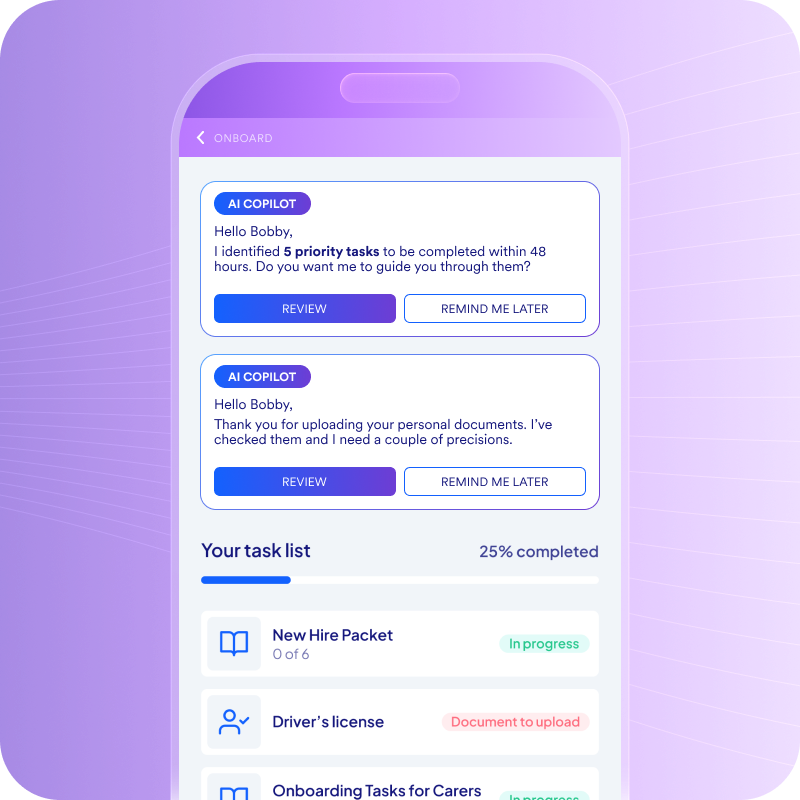
- Anna, the AI Recruiter, runs voice and SMS screening around the clock, so the 11 p.m. application gets a reply before the morning shift.
- Emma, AI 24/7 Support, answers candidate questions and clears document blockers at any stage.
- Sam, AI Satisfaction, surfaces post-hire engagement and retention signals so the workflow doesn’t stop at the offer.
Recruiters and managers keep every consequential decision.
The agents act on the platform underneath. Fountain Sourcing launches the channel mix and tracks spend against hires, Fountain CRM holds the past-applicant pool reactivation depends on, and the Fountain ATS gives candidates the five-minute mobile application and self-scheduling, with Onboarding and Shift & Scheduling carrying the hire to a covered first shift.
Alto ran this stack across five new markets, hiring 450 drivers in six months with three recruiters and holding cost-per-hire at $300 against the $4,683 average in SHRM’s Talent Access Report benchmarking data from 2021.
Boards change their visibility rules, and the channel carrying your volume this year may not carry it next. What holds value is a pipeline that answers every applicant within hours and a candidate database you own, because both survive the change.
Book a demo to see it run on your own roles: a same-week 50-hire plan across three sites, Anna screening overnight applicants, and a CRM list that fills the next opening.
Frequently asked questions about finding employees online
What is the best way to find employees online?
A small mix rather than maximum coverage: one high-traffic aggregator, an hourly-specific platform, and a mobile-first careers page, with every applicant answered within hours. That buys reach, role fit, and response speed without overbuilding the board budget.
What are the best free ways to find employees online?
A careers page marked up with Google’s JobPosting structured data, Facebook Local Jobs and community groups, employee referrals, and free tiers on general job boards. Free channels fit a handful of openings rather than continuous multi-site volume, so add paid sourcing once openings outrun free traffic.
How much does it cost to find employees online?
SHRM’s Talent Access Report benchmarking (data collected 2021) puts cost-per-hire at a $1,244 median and a $4,683 average. Frontline roles can run higher per posting dollar because applicant conversion is often lower than desk-based roles. If yours is climbing above benchmark, audit channel conversion and response speed before adding job-board spend.