Job boards charge per unit of applicant flow, so the bill scales with hiring volume while conversion doesn’t. Sponsored postings buy visibility, not retained hires. A frontline employer filling hundreds of roles pays more each cycle for the same funnel.
Sourcing candidates without job board fees means moving that spend from rented channels to owned ones, not expecting hires for free. Four channels carry it: your career site and employee referrals do the heaviest lifting, with your candidate database and a short list of organic sources behind them.
Each costs time, and each has to earn its place on cost per retained hire at day 90. It’s one component of a broader high-volume hiring strategy.
What does it mean to source candidates without job board fees?
Fee-free sourcing means building applicant flow through channels you own or earn rather than channels you rent per click, per application, or per sponsored post.
Fee-free is not board-free. Free posting tiers, aggregators, and search-driven listings all stay in the mix. The line is about paid amplification, not job boards as a category.
Posting and sourcing also differ: posting waits for candidates, while sourcing goes and gets them through outreach to past applicants and referral asks tied to open shifts.
Why per-applicant board spend breaks at frontline volume
Board pricing charges for flow, not outcomes, so cost rises with headcount while application quality stays flat. Frontline churn multiplies it: retail turnover stays high, so a location with 20 frontline roles refills the same positions again and again, repurchasing the same acquisition cost each time.
The replacement bill runs well past the ad spend. Per the 2025 Fountain Frontline Report, replacing one frontline worker costs $6,500 to $7,000, roughly 40% of annual pay, once recruiting, onboarding, training, and lost productivity are counted.
The same research finds hiring costs have doubled since 2020. Career-site fixes, referral links, and tagged records produce the same flow without repaying a board each month.
Your career site is the only sourcing channel you fully own
Career-site traffic runs higher-intent than job-board traffic, because candidates arrive through your brand rather than a rented listing feed. It’s also the one channel where you control the form, the speed, and the follow-up, so fixes compound instead of resetting each budget cycle.
Structured data comes first. Pages carrying valid JobPosting markup become eligible to surface in Google’s job results at no cost. The markup counts one job per page, so a roll-up careers page can’t surface a Memphis opening to a Memphis searcher, and multi-site employers need location-level pages. Google doesn’t guarantee display, but pages without markup guarantee absence.
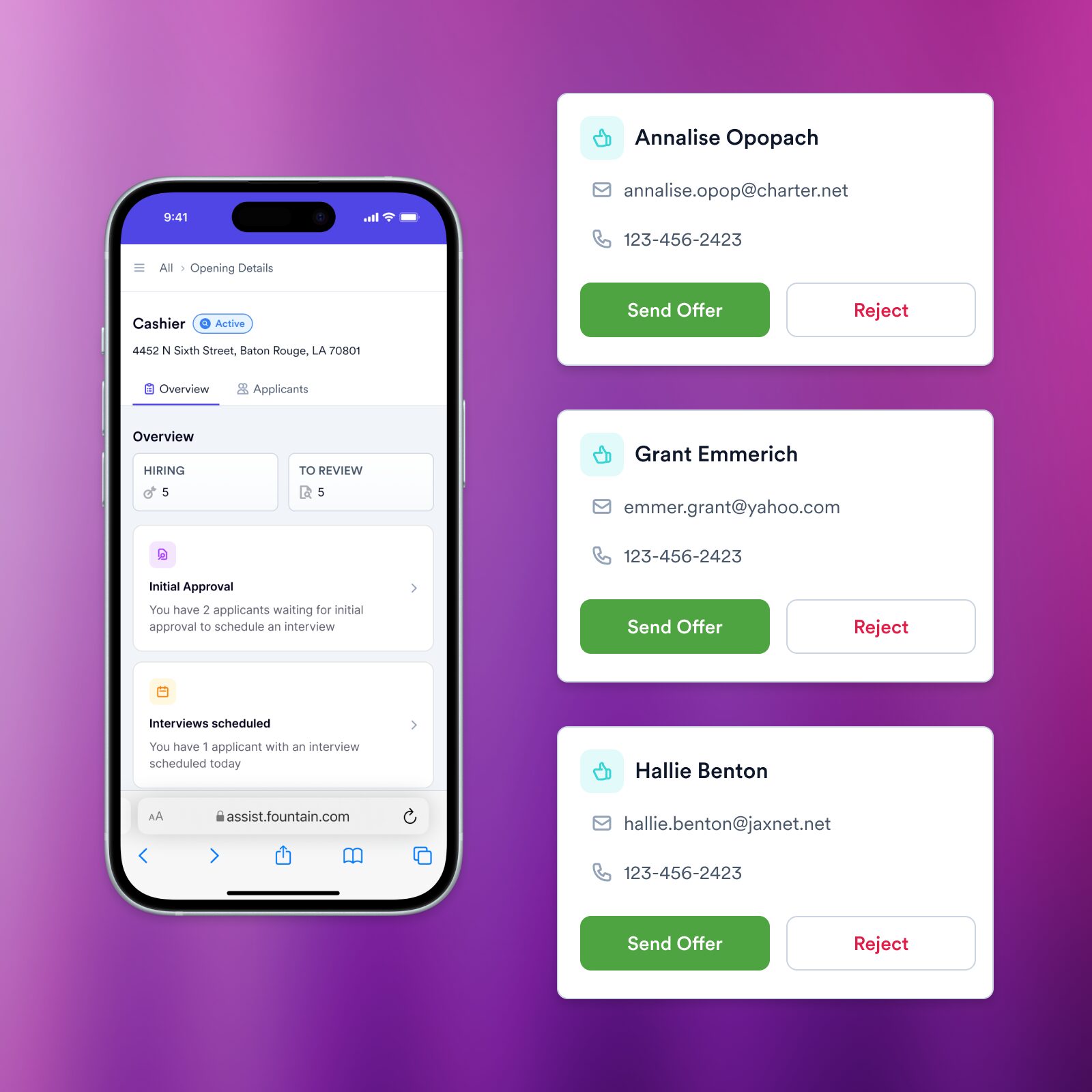
Your simple, smart, and speedy hiring solution.
Fountain knows hiring. We leverage our best in class AI to find and bring you top-tier, ready-to-work talent. We use our expertise to build personalized plans tailored specifically to your needs.
Cut the application flow next. Most frontline candidates apply from a phone, and Fountain’s Redefining Frontline Operations research finds 60% of applicants abandon applications that run too long or aren’t built for mobile. Run your own flow on a phone with a stopwatch and treat anything past five minutes as the leak.
How to run a referral program that produces real volume
Referral programs produce real frontline volume only when they are phone-first, promoted against specific open roles, paid on a retention milestone, and tracked as a source.
Four mechanics separate the programs that produce submissions from the ones that exist on paper:
- Make submission phone-first. A referral link or QR code has to be reachable from a phone in under a minute, which means SMS rather than email, because most frontline workers never check a corporate inbox.
- Tie the reminder cadence to open roles. A reminder naming the shift that needs coverage gives the referrer something concrete to forward. An annual policy email doesn’t.
- Anchor payouts to a retention milestone. The 90-day mark is the trigger that matters, with half released at start. An NBER field experiment at a grocery chain found larger bonuses increase referral volume but decrease hire quality, which argues for a moderate referral bonus paid reliably over a large one paid late.
- Capture the source on every referral. Without a source field, hires are unattributable and payouts get missed, which kills worker trust faster than any bonus design can rebuild.
Build the first campaign around your hardest-to-cover shift, with a mobile link, a source field, and a 90-day payout rule. Programs with all four can produce submissions the same week a shift opens.
How to reactivate candidates you have already paid for
The candidates already in your database are the cheapest you will ever source, because their acquisition cost is sunk.
Four pools sit in there, and each needs its own tag:
- Past applicants who never finished need a completion-focused nudge back into the flow they abandoned.
- Qualified past candidates who cleared screening but lost one opening need a callback for a similar role.
- Seasonal workers who left in good standing need a return-to-work message timed to the next peak.
- Former employees need a distinct reactivation trigger, not a generic blast.
Tag candidates the moment you reject them or close a role, because campaigns run months later have no usable segments otherwise. Segment by role and location, and reference the prior application so the message reads as a callback.
Organizations keeping pre-built pipelines generally hire faster and convert offers at higher rates than teams starting cold, per Aptitude Research’s talent acquisition funnel research.
Consent decides whether a pool is usable at all, and automated recruiting texts to past applicants may require prior express written consent in the U.S. where they qualify as advertising. This is general information rather than legal advice, so confirm with counsel.
Which organic and community channels are worth the effort?
Organic channels are worth genuinely different levels of effort, and this is where fee-free advice oversells.
Sort them by return before you spend manager time:
- Trade schools and workforce agencies are the most durable. Partnerships take months of coordination on skill standards, and produce a standing pipeline rather than a burst of applicants.
- Local community groups merit an hour a week, no more. Frontline candidates are genuinely there, but active feeds bury posts within minutes.
- Employee content builds awareness, not attributable hires. Count it as a brand asset, not a tracked applicant source.
Tag each partner and group separately before you post, so reporting shows which produce retained hires. At 40 roles a month across a dozen locations, community posts will not carry the plan.
How to tell whether a fee-free channel is worth keeping
Cost per applicant is the wrong single metric, because a cheap channel that never converts is expensive. Track five steps per channel instead: applicants, completed applications, interview show rate, hires, and retained hires at day 90.
Show rate is where frontline channels diverge most sharply, since a channel producing applicants who never appear burns interviewer time that shows up on no invoice, which is why candidate experience metrics belong in the same report.
A channel earns its place on cost per retained hire: total spend plus staff time, divided by hires still working at day 90. So require a source tag on every applicant and review by retained hire, because a community group sending 80 applicants looks like a win until the report shows two stayed.
What a fee-free pipeline costs you in time
Owned channels are cheaper per hire and slower to start, and pretending otherwise is how reallocation projects die. Career-site fixes show results in days, structured testing takes weeks, and referral flow needs roughly a quarter of consistent promotion before it steadies.
Plan the shift across two or three hiring cycles, and keep sponsored spend on the hardest-to-fill roles where speed still justifies the price.
Owned channels also generate work rather than reduce it, which is why they stalled at volume historically. Pools need segmenting, referrals need chasing, and after-hours applicants sit in a queue until someone is at a desk.
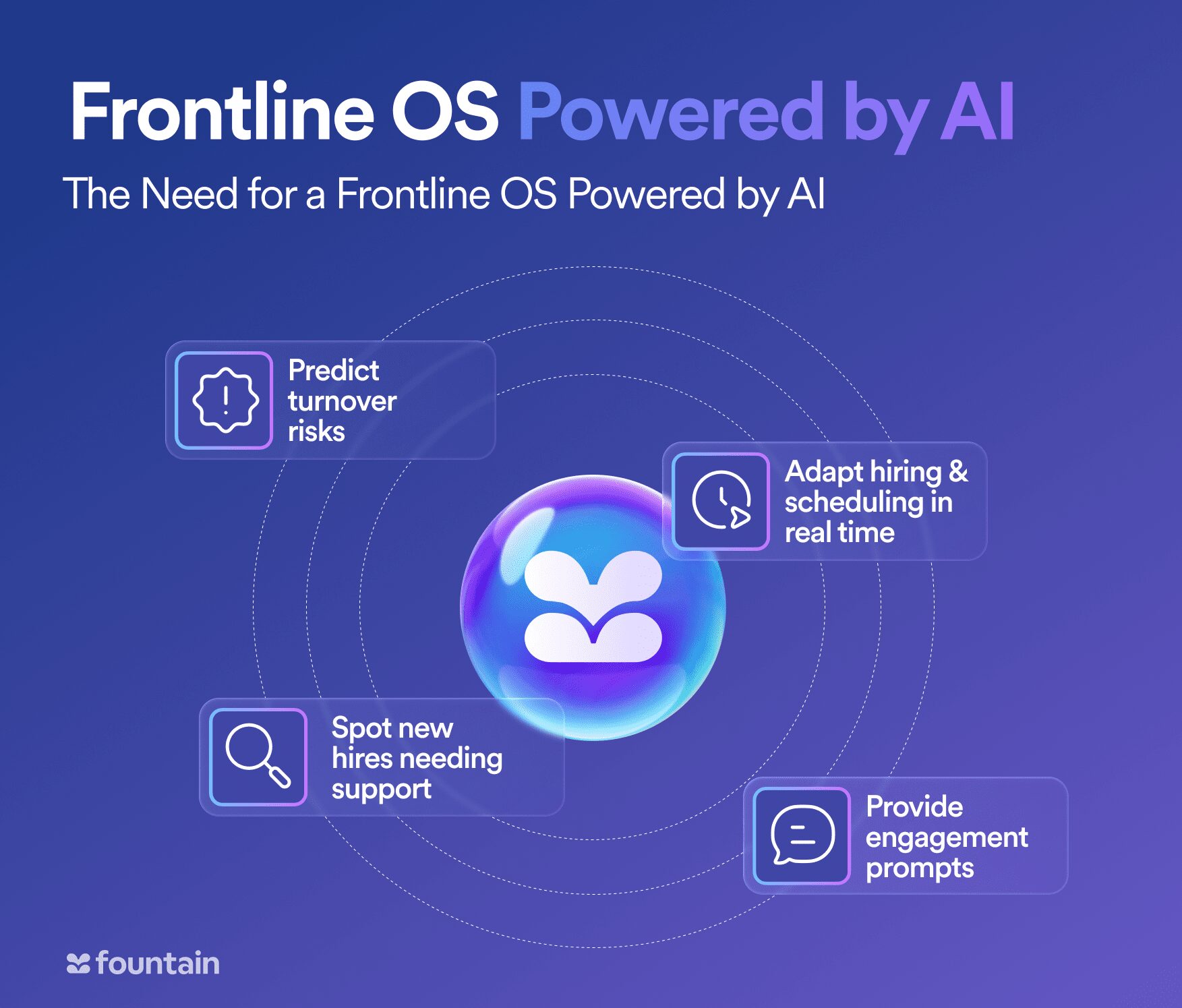
Agentic screening, outreach, and re-engagement change that arithmetic by running the coordination continuously while recruiters and managers keep every hiring decision. Gartner identifies high-volume frontline roles, including retail workers and drivers, as the strongest fit for an AI-first recruiting approach.
How Fountain runs fee-free frontline sourcing
Fountain runs owned-channel sourcing through Cue, the orchestration layer above every Fountain product and the core of its Frontline Superintelligence. A recruiter types “Re-engage last season’s warehouse associates who opted into texts, for the 30 open roles in Memphis,” and Cue assembles the campaign: the segment, the consent filter, the outreach, and a recruiter-review queue.
Cue orchestrates the agents that keep that flow moving:
- Anna, the AI Recruiter, runs voice and SMS screening around the clock, so the 11 p.m. applicant your career site produces gets screened instead of queued behind recruiter calendars.
- Emma, AI 24/7 Support, answers candidate questions and clears document blockers.
- Sam, AI Satisfaction, surfaces the post-hire retention signals that show whether a channel produced workers who stayed.
The agents recommend and route; recruiters and managers make the hiring calls.
Those agents act on the platform underneath. Fountain Sourcing distributes jobs and tracks spend against actual hires, Fountain CRM holds the owned talent pool and runs re-engagement campaigns, and ATS and Onboarding carry responders to Day 1 with consent and source intact.
For example, Alto (the rideshare operator) used Fountain to hire 450 drivers in six months with three recruiters at an average cost per hire of $300, well under the roughly $4,700 average SHRM estimates.
Book a demo to see that run on your roles, with Cue coordinating a reactivation campaign and cost per retained hire reported by channel.
Frequently asked questions about sourcing without job board fees
Can you really hire without paying for job boards?
For some roles and markets, yes. At frontline volume, reallocate board spend rather than eliminate it: owned channels absorb the recurring hiring while sponsored spend stays on the hardest-to-fill roles.
What are the best free sourcing channels for frontline roles?
The career site and employee referrals convert best per applicant when they’re tracked through retained hire rather than application count, so promote referral links against open shifts before raising paid board spend. Talent pool reactivation follows close behind, because those candidates cost nothing new to acquire.
How long does it take to build a fee-free sourcing pipeline?
Plan on two to three hiring cycles: days for career-site fixes, weeks for structured testing, about a quarter before referral flow steadies, and months before a role-family pipeline produces ready-now candidates.