Finding restaurant employees today comes down to two moves: source from several channels at once, and make every step fast enough that candidates don’t leave for a competitor mid-process. The operators who keep their shifts covered have rebuilt the front of their hiring funnel so people apply in minutes, hear back the same day, and reach a first shift before anyone else closes them.
That speed is a financial decision, not a nicety. Every unfilled shift piles on overtime, slows service during the rush, and pushes revenue out the door. Each frontline worker who leaves costs roughly $7,000 to replace once recruiting, training, and lost productivity are counted, the Frontline Report found.
Most of that cost is self-inflicted. The hiring process, not the labor pool, is where restaurants lose the candidates they could have kept.
Understanding why restaurant workers are hard to find
The labor pool shrank and the competition for it got richer. The Bureau of Labor Statistics puts labor-force participation at about 62 percent in 2025, near its lowest in years, and job growth has stalled. Restaurant openings still rank among the highest of any industry: BLS pegged the accommodation and food services openings rate at 5.5 percent in March 2026.
Pay is part of the squeeze. BLS wage data shows leisure and hospitality averaging $22.83 an hour, retail at $25.71, and transportation and warehousing at $31.52. Its occupational figures put a fast-food cook at $15.57. Restaurants often can’t win on pay alone.
Candidate expectations shifted too. They apply on their phones, expect quick replies, and drop employers who ghost them. Schedule flexibility ranks among the top reasons Gen Z workers stay past the first week.
The supply side tightened further. The Center for American Progress reports net international migration fell from 2.7 million to 1.3 million between mid-2024 and mid-2025, with foreign-born workers making up about one in five leisure and hospitality workers.
So what works when the pool is this thin? Posting a role and waiting for applications no longer fills it. That approach leaves you fishing the same shrinking pond as everyone else, at the speed of whoever refreshes their inbox first. The employers filling roles run several channels at once and build speed into every step.
Where to find restaurant employees, channel by channel
No single channel fills a restaurant. The operators who stay staffed run several at once and track which ones actually produce hires. Six channels are worth running, each with a first move you can start this week.
- Job boards, paired not solo. Indeed brings reach but gets crowded and expensive on pay-per-click. Pair it with Google for Jobs and a hospitality board like Poached or Culinary Agents, then compare cost-per-application after two weeks and shift spend toward whatever produces interviews.
- Social that shows the actual work. A 30-second, lo-fi “day in the life” filmed with a current crew member beats polished content for younger candidates. Post it with an apply link so someone can picture the job and tap through.
- School partnerships for back-of-house. Culinary programs, community colleges, and high schools stay underused for kitchen roles like line cook and prep cook. Call the nearest career services office and ask to post open kitchen roles.
- Employee referrals. Referrals are among the most efficient channels, bringing better-fit hires who stay longer. Pay the bonus after the referred hire clears 90 days, so the reward tracks the people who make it past early attrition.
- Foot traffic into applications. The National Restaurant Association points to QR codes, text-to-apply, and mobile-first applications as the tools that make applying easy. Put a “Now hiring, text to apply” code on the door, register, and table tents.
- Walk-ins and local boards. In a tight local market, the person who wanders in on a slow afternoon is a real candidate. Keep a mobile apply link ready so they can finish before they leave.
Running six channels by hand is its own job. Fountain is the AI-native platform for the frontline workforce, and its Sourcing product launches and tracks campaigns across these channels while CRM re-engages past applicants you’ve already paid to reach. Turn on one priority role, a text-to-apply link, and a referral push this week, then let the numbers show which channels fill shifts instead of just generating clicks.
Start with referrals and text-to-apply. Referrals bring pre-vetted people who stick, and text-to-apply catches interest the moment someone decides they want to work for you. Together they’re the fastest, cheapest pair to stand up this week.
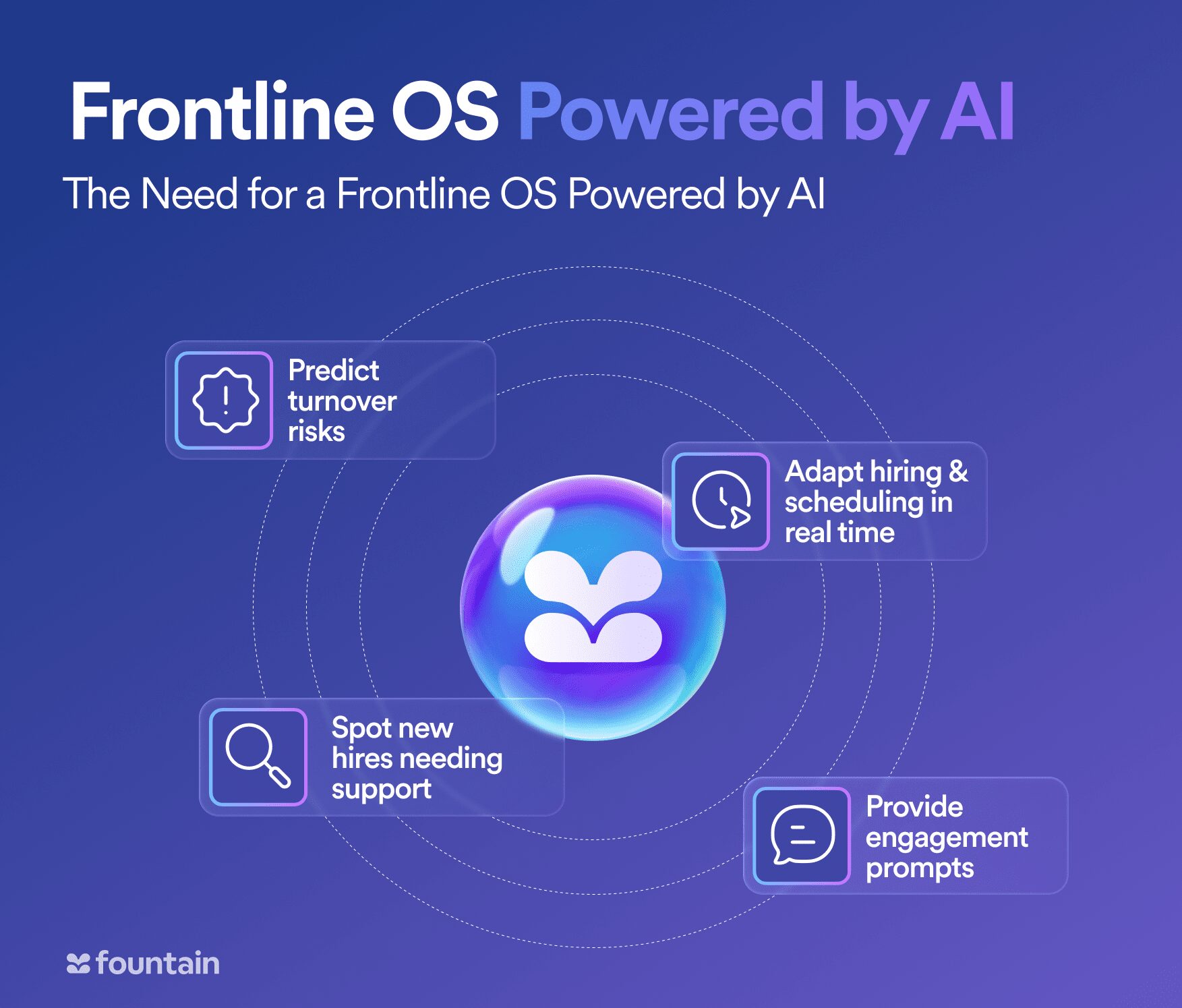
A smarter, connected way to hire, engage, and retain frontline teams
Centralize scheduling, hiring, onboarding, engagement, and analytics in one AI-powered platform built for the frontline workforce. Fountain OS gives leaders the real-time insights and tools they need to predict turnover, boost retention, and streamline high-volume operations.
Automate repetitive tasks, identify at-risk employees early, and make data-driven workforce decisions with a unified solution designed to help frontline teams thrive.
Writing a job post that gets applications
A restaurant job post converts when a candidate can find the essentials in seconds and finish applying in minutes. Four things decide whether they apply or scroll past:
- A plain, searchable title: “line cook,” not “culinary team specialist”; “bartender,” not “mixologist.” Candidates search the words they’d say out loud.
- Pay, hours, and location up top. Swap “competitive pay” for a real range, state the shift times and whether weekends are required, and name the location.
- Benefits worth mentioning: the employee discount, flexible scheduling, any medical coverage.
- A short, human description. A few lines on why the job’s worth having beat a wall of requirements.
Once a post reads like a policy manual, apply rates fall. If a candidate has to hunt for pay or location, the post is already leaking applicants.
The bigger leak is the application itself. SHRM reports that cutting it to five minutes or less is tied to a 365 percent jump in conversion, yet Restaurant Dive puts the typical restaurant application at 30 to 40 minutes.
Drop forced account creation, allow a resume upload instead of manual re-entry, and cut the question count. A 2016 CareerBuilder study found 60 percent of applicants quit midway when a form felt too long or complex, so every field you cut is a candidate you keep.
Fountain’s ATS builds the post and the mobile application as one flow, so the plain title, real pay range, and under-five-minute apply a candidate sees in the ad carry straight into the form on their phone.
Screening and moving fast before candidates ghost
Adopt one rule tomorrow: reply within 24 to 48 hours, faster if you can. Job seekers rank fast responses at the top of what they want, yet a 2022 Sense survey found only 19 percent heard back within a day. Frontline candidates are usually comparing offers and move with whoever gets them to an interview first. Wait too long and you lose them before the conversation starts.
Screen for what disqualifies fast: availability, schedule fit, and real interest. Ask every candidate the same structured questions so you’re comparing people fairly, and weigh coachability over credentials for frontline roles. Let candidates self-schedule interviews instead of playing phone tag, since scheduling is one of the easiest places to lose someone.
When applications land at 11 p.m. or while a manager is on the floor, the reply doesn’t have to wait. Anna, a Fountain agent, can run first-pass phone screens 24/7 and route qualified candidates to managers for review, and the ATS lets those candidates book their own interview. Anna and the ATS handle the follow-up; managers still make every hiring call.
The difference shows up in the numbers. Bojangles, a 750-location chain, kept managers in the hiring decision while cutting time-to-hire from 30 days to 5.8, an 80 percent drop, and spent 86 percent less on job boards. Before, a manager posts to a crowded board and chases applicants between shifts. After, qualified candidates screen themselves in and book interviews on their own, and the shift gets covered before the weekend.
Keeping who you find: onboarding and retention
You don’t source your way out of a churn problem. The riskiest gap is between offer and first shift: a 2019 Indeed survey found 22 percent of workers accepted an offer and never showed up on Day 1, and that 40 percent of them bailed because a better offer arrived. A light preboarding cadence keeps new hires warm, with a welcome text, paperwork pushed to their phone, and a day-before reminder.
Move the paperwork off the first shift entirely. Form I-9 Section 1 is due no later than Day 1 and W-4 takes effect with the first paycheck, but a new hire can finish both on a phone once they’ve accepted the offer. Fountain’s Onboarding runs the welcome text, mobile paperwork, and reminders from one workflow, so Day 1 starts with training instead of a clipboard.
Then hold onto people with the levers that actually move frontline retention:
- Predictable scheduling. SHRM ranks scheduling among the top retention levers for frontline workers, and posting schedules further out lowers turnover.
- Fair, transparent pay. Among workers who feel they’re paid fairly, 86 percent have no plans to leave, the Frontline Report found.
- A visible path up. SHRM found career support would keep 64 percent of frontline staff for six more years.
- Recognition and a manager who listens. The day-to-day relationship is what most often decides whether someone stays.
Treat exit interviews as sourcing intelligence. When a good worker leaves over scheduling, flag them rehire-eligible and reach back out when their situation changes. Every worker you keep is a shift you don’t have to fill, a job-board dollar you don’t spend, and a referral source you get to keep.
How Fountain fits
Put those steps together and high-volume hiring means running four systems at once: sourcing, screening, onboarding, and re-engagement. Fountain connects them under one platform it calls Frontline Superintelligence, with Cue as the layer that coordinates the work from a plain-English prompt. Ask Cue to “hire 10 line cooks across our three busiest stores by Friday” and it turns that goal into sourcing, screening, scheduling, and onboarding tasks for a manager to review and approve.
Anna screens candidates around the clock so only qualified people reach a manager, and Onboarding gets I-9 and W-4 done before Day 1. Roadmap items may include more agents such as Emma for paperwork guidance and Sam for post-hire engagement; confirm current availability with your Fountain contact. Every hiring and offer decision stays with a person, while the Agentic AI handles screening, scheduling, and paperwork so managers spend their time on interviews and offers.
The payoff is speed you can measure. Because 86 percent of restaurant candidates apply from a phone, a mobile-first application is the difference between reaching a manager and never entering the funnel. With Fountain’s AI in the loop, Fetch cut time-to-hire by 95 percent, from 15 days to 6.5 hours, the kind of speed that closes a qualified candidate before a competitor’s offer lands.
In frontline hiring, the operator who moves fastest fills the shift. Source from several channels, answer candidates the same day, and finish Day 1 paperwork before the first shift, and the unfilled-shift cost that opened this piece starts working in your favor instead of against you. Book a Demo to run Fountain against your own hiring goals.
Frequently asked questions about finding restaurant employees
What’s the fastest way to find restaurant employees right now?
Referrals and text-to-apply, run together. Referrals bring people who already understand the job and tend to stay, especially when the bonus is tied to a successful first 90 days. Text-to-apply and QR codes turn your existing foot traffic into applicants the moment they decide they’re interested.
Where should I post restaurant jobs to get the most applicants?
Pair a high-reach board like Indeed with a hospitality board such as Poached or Culinary Agents, and add Google for Jobs. Post the same role across two channels, then judge them on cost-per-application and time-to-hire, not raw clicks.
How fast should I respond to restaurant applicants?
Within 24 to 48 hours at the outside, and same-day wins. Frontline applicants often take the first offer that moves, so an automated acknowledgment within minutes plus a self-schedule interview link is the benchmark to beat.
Will AI replace restaurant hiring managers?
No. The working model is human-in-the-loop: Anna screens candidates and the ATS supports self-scheduling, while managers evaluate and decide. Gartner found only 26 percent of candidates trust AI to evaluate them fairly, and a separate Gartner survey of enterprise IT leaders found just 15 percent were considering, piloting, or deploying fully autonomous agents. Teams that use AI well move faster, but the hiring decision stays human.